Last Updated: 12 November 2026
Quick Summary
Prioritising school cleaning tasks with fewer staff means scoring each task for health risk and visibility, then tackling the highest-scoring must-do tasks first. Toilets, food preparation surfaces and entrance handles usually top the list, while low-risk jobs such as storage cupboard floors can wait until a fuller team is in place.
- Score each task from 1 to 3 for risk and again for impact, then add the two together.
- Tasks scoring 5 or 6 are must-do items and should be completed before the first lesson.
- Toilet checks, food preparation surfaces and entrance door handles all score 5 or 6 in the example matrix.
- Review the priority matrix each half term and after any outbreak of illness.
- Share the agreed list with the headteacher or site lead so deferred tasks are understood.
Table of Contents
- Why Staff Shortages Hit Schools Harder Than Most Sites
- How to Rank School Cleaning Tasks by Risk and Impact
- Building a Daily Cleaning Checklist for Reduced Staffing
- Setting a School Cleaning Rota Around Limited Hours
- Covering Cleaning Duties When a Member of Staff Is Off Sick
- Applying the Same Priority Logic to Commercial Office Cleaning
- Booking Managed Cleaning Cover for Your School or Office
- Frequently Asked Questions
Schools rarely have a full cleaning team on any given day, and Nirvana Managed Services LTD works with headteachers and bursars who are trying to keep classrooms, toilets and entrances clean with fewer hands. When staff numbers drop, the question is not whether every task gets done, but which tasks must be done first. Prioritising school cleaning tasks with fewer staff is a practical skill, and it can be learned. This guide sets out a simple way to rank tasks, build a daily checklist and set a rota that fits the school day.
Why Staff Shortages Hit Schools Harder Than Most Sites
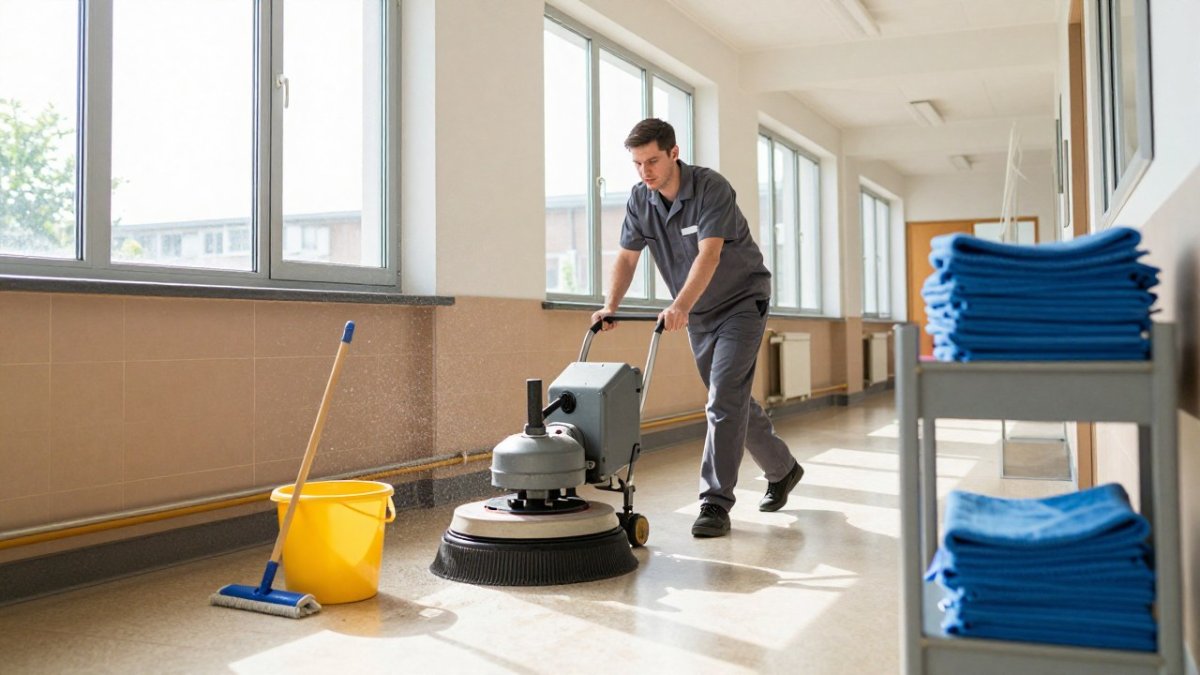
A school is a busy building with a fixed timetable. Pupils arrive at the same time each morning, lunch falls in the same slot, and the building is used heavily for most of the day. When one cleaner is off sick, the work does not pause. Corridors still get dirty, toilets still need checking and classrooms still need to be ready for the first lesson.
Commercial offices often have more flexibility over when cleaning happens. Schools usually do not. A missed task in a classroom or washroom is noticed quickly by staff, pupils and parents.
- Fixed start and finish times leave little room to catch up
- Heavy use throughout the day means hygiene needs regular attention
- Pupils and visitors notice a poorly kept entrance straight away
- A single absence can leave one person covering a large site
How to Rank School Cleaning Tasks by Risk and Impact
When staff numbers drop, the fastest way to decide what matters most is to score each task on two things: the risk to health if it is missed, and how visible the problem would be to pupils, staff and visitors. A task that scores high on both goes near the top of the list. This is the same logic used in a school risk assessment, and it gives you a defensible reason for every decision.
Start by listing every cleaning task across the school. Then give each one a score from 1 to 3 for risk and another from 1 to 3 for impact. Use the table below as a starting point and adjust it for your site.
| Task | Risk score (1-3) | Impact score (1-3) | Total | Priority band |
|---|---|---|---|---|
| Toilet checks and restocking | 3 | 3 | 6 | Must-do |
| Food preparation surfaces | 3 | 3 | 6 | Must-do |
| Entrance door handles and handrails | 2 | 3 | 5 | Must-do |
| Classroom desks and shared equipment | 2 | 2 | 4 | Should-do |
| Corridor floors | 2 | 2 | 4 | Should-do |
| Staff room kitchen surfaces | 2 | 2 | 4 | Should-do |
| Storage cupboard floors | 1 | 1 | 2 | Can-wait |
| Decorative shelving in offices | 1 | 1 | 2 | Can-wait |
Risk score (1-3)
Add the two scores together. Tasks with a total of 5 or 6 are must-do items. Tasks scoring 3 or 4 can usually follow, and tasks scoring 2 can wait until a fuller team is in place. Many schools find that a short list of six to eight must-do tasks covers most of the real risk. That list becomes the core of the daily routine.
Schools often apply this matrix to each building separately, because a Victorian primary school with outside toilets has a different risk profile from a modern secondary with automatic flush systems. The matrix should be reviewed each half term and after any outbreak of illness.
Watch out: scoring every task as high risk defeats the purpose. Be honest about which tasks genuinely affect health and safety, and which are simply visible. A corridor floor that is swept daily but mopped weekly is usually a should-do, not a must-do, unless there is a spill.
Once the matrix is agreed, share it with the headteacher or site lead so that everyone understands why some tasks are being deferred. This avoids the common problem of staff feeling that standards are slipping when in fact the team is focusing on the highest-risk work.
Building a Daily Cleaning Checklist for Reduced Staffing
A checklist turns the ranking into something a single person can follow. Keep it short, print it, and put it where the cleaner will see it at the start of the shift. A good checklist names the task, the area and the time it should be finished by.

Must-do tasks before the first lesson
These are the tasks that cannot slip. They protect pupils and staff from the first bell onwards.
- Check and restock toilets and handwashing stations
- Wipe down door handles, handrails and light switches in entrances
- Clear any spills or hazards in corridors and classrooms
- Confirm kitchen and dining surfaces are clean and ready
Tasks that can wait until the school day ends
Once the building is open, some tasks are better done after the bell. Doing them later avoids disturbing lessons and gives the cleaner time to work without interruption.
- Sweep and mop classroom floors
- Empty bins across the building
- Clean whiteboards, desks and shared equipment
- Restock paper towels and soap in staff areas
Setting a School Cleaning Rota Around Limited Hours
A rota shows who does what and when. With limited staff, it helps to split the building into zones and assign each zone a clear time window. This stops tasks from being forgotten and makes it easy to see where cover is needed.
Plan the rota around the school day rather than the other way round. Early morning covers the must-do list. Mid-afternoon can handle a quick check of toilets and high-traffic areas. The end of the day is for deeper cleaning.
- Assign each zone a named person or a clear backup
- Give every task a start time and a finish time
- Leave a 15-minute buffer for unexpected spills or incidents
- Review the rota each half term and adjust for busy periods
Covering Cleaning Duties When a Member of Staff Is Off Sick
Sickness absence is the moment the priority list earns its keep. When someone calls in unwell, the first step is to check the must-do list and confirm those tasks are covered. Anything lower on the list can be moved to later in the week.
Keep a simple cover plan ready. Write down which tasks the remaining staff should pick up first, and who can be called for extra help. Clear communication matters too. Let the headteacher or site lead know which tasks are at risk so they can make informed decisions.
A common mistake is trying to keep every task running at full strength during an absence. This usually leads to tired staff and missed high-risk tasks. Focusing on the must-do list keeps the school safe and clean where it counts most.
Applying the Same Priority Logic to Commercial Office Cleaning
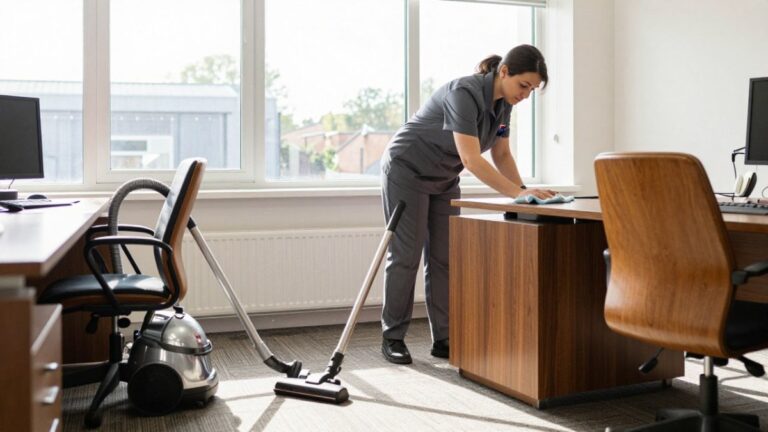
The same risk and impact scoring works well for offices, but the priorities shift. Offices often have fewer high-risk hygiene areas than schools, yet they have more visible reception spaces and shared kitchens that clients and staff notice immediately. For commercial office cleaning, the mix of small business units, serviced offices and larger corporate sites means the must-do list should be agreed with the facilities manager or office manager rather than assumed.
Start with the areas that affect health and safety and business continuity. In most offices, the must-do list includes:
- Washrooms and handwashing stations
- Kitchen and food preparation areas
- Reception desks and entrance door handles
- Shared meeting room tables and touchpoints
- Bin emptying in food areas
Tasks such as carpet vacuuming in low-traffic back offices, internal window cleaning and storage room floors can usually be moved to a weekly or fortnightly schedule when staff are short. The key is to write the list down and agree it with the person who signs off the cleaning contract.
A practical way to apply the matrix in an office is to walk the site with the office manager and score each area together. This takes about 30 minutes for a typical two-floor office and produces a list that both sides accept. In older converted office buildings, pay particular attention to entrance matting and stairwells, which can collect more dirt than in purpose-built sites.
Watch out: offices often have lone working arrangements for early-morning cleaners. If a cleaner is working alone before 7am, the risk assessment should cover safe access, emergency contact and the handling of cleaning chemicals. The priority list should never require a lone cleaner to move heavy furniture or work at height.
For offices with client-facing reception areas, a quick midday check of reception and washrooms can protect the business image without a full clean. This is often more valuable than completing a lower-priority task such as cleaning internal glass. The same scoring method helps you decide: a reception with visible fingerprints scores high on impact even if the health risk is low.
If you are trying to maintain standards in your office with fewer cleaning staff, the priority matrix gives you a clear, defensible plan that you can review each month. It also makes it easier to bring in cover for specific tasks rather than paying for a full service when only the must-do list needs attention.
Booking Managed Cleaning Cover for Your School or Office
Building and maintaining a reliable rota takes time, and it becomes harder when absences are frequent. Many schools and offices choose to bring in managed cover, where the cleaning and caretaking work is organised and the gaps are filled when they appear.
Nirvana Managed Services LTD provides managed soft services for schools and commercial offices, including recruitment, contract management and cover when a member of staff is off sick, and this service also covers commercial cleaning for offices. Pricing depends on the size of the site and the level of service needed, so the best next step is to contact the team for a quote tailored to your building. A short conversation about your current rota and your must-do tasks is often enough to see whether managed cover would help.
Frequently Asked Questions
Which school cleaning tasks should be prioritised when staff are short?
Start with tasks that protect health and safety and that people notice first. Washrooms, frequently touched surfaces such as door handles, light switches and taps, and entrances and corridors used at arrival and dismissal should come first. Classroom floors and bins can often wait a day if the risk is low. Write the order down so whoever covers the shift knows what to do without asking, and review the list each term as staffing changes.
How can a school create a cleaning rota with fewer staff?
Map every task to a time slot, then estimate how long each takes in minutes. Add those totals up and compare them with the hours your team actually has. If the numbers do not fit, move low-priority tasks to a fortnightly or termly slot rather than cutting high-risk daily work. Build in a short buffer for interruptions, and keep the rota on a single shared sheet so changes are visible to everyone.
How should schools manage cleaning cover when a member of staff is off sick?
Agree a cover plan before it is needed. Name a person or a managed provider to call, set out which tasks must still happen that day, and keep the reduced-staffing checklist in a known place. Tell the headteacher or bursar early so decisions about deferring tasks are made quickly. A managed service with a cover commitment removes the need to find someone at short notice.
Can a managed cleaning service provide cover for schools and offices in Chester and Wrexham?
Nirvana Managed Services LTD offers a fully managed service that includes contract management and cover when a member of staff is off sick, and it also covers commercial office cleaning. For current availability in Chester and for a quote suited to your site, please contact Nirvana Managed Services LTD through its website.