
Table of Contents
- Why Maintaining Cleaning Standards in Offices Matters
- Creating an Office Cleaning Checklist That Works
- Implementing an Office Cleaning Schedule
- Commercial Cleaning Quality Control Methods
- Managing Cleaning Contracts Effectively
- Training Your Cleaning Team
- Handling Common Challenges
- Frequently Asked Questions
Last Updated: 9 October 2026
Why Maintaining Cleaning Standards in Offices Matters
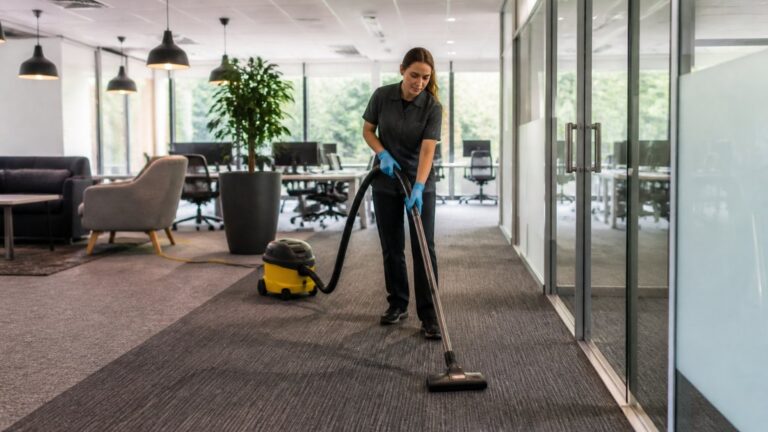
Maintaining cleaning standards in offices is the foundation of a healthy, productive workplace. When standards slip, so do employee morale, client impressions, and compliance with health regulations.
A clean workspace reduces illness transmission among staff. It creates a professional impression for clients visiting your site. It also demonstrates that your business takes health and safety seriously, which matters under the Health and Safety at Work etc. Act 1974, which places a duty on employers to maintain safe premises.
The real challenge isn’t knowing why standards matter. It’s maintaining them consistently when staff change, budgets tighten, or absences disrupt routines. This guide covers how to build systems that keep your office clean, no matter what.
Creating an Office Cleaning Checklist That Works
A solid office cleaning checklist is your first line of defence. It removes guesswork and ensures nothing gets missed, whether you manage cleaning in-house or outsource to a contractor.
Daily, Weekly and Monthly Tasks
Your checklist should divide tasks by frequency. Daily tasks keep the office presentable. Weekly tasks address deeper cleaning. Monthly tasks handle areas that accumulate grime over time.
Daily tasks (performed every working day):
- Empty bins and replace liners
- Wipe desks and tables
- Sweep or vacuum high-traffic areas
- Clean toilet facilities
- Restock washroom supplies
- Spot-clean visible marks on walls or glass
Weekly tasks (performed once per week):
- Mop hard floors thoroughly
- Clean mirrors and glass surfaces
- Dust shelves, desks, and equipment
- Disinfect door handles and light switches
- Clean inside microwaves and fridges
- Wipe down kitchen surfaces
Monthly tasks (performed once per month):
- Deep clean carpets or upholstered areas
- Clean inside cupboards and storage areas
- Descale taps and showerheads
- Polish wooden furniture
- Clean air vents and grilles
- Wash windows inside and out
The specifics depend on your office type. A medical practice has different needs from a tech startup. A school in Chester might prioritise different areas from a commercial office building. Tailor your checklist to your actual space.
Assigning Responsibility
A checklist means nothing if no one knows who’s accountable. Assign specific tasks to specific people. Use a rota system that rotates responsibility fairly.
When tasks are assigned:
- Cleaners know exactly what’s expected
- Managers can track completion
- Gaps become visible quickly
- Quality improves because someone owns the outcome
Document who does what, on what day, and at what time. Use a simple spreadsheet or printed rota posted in a staff area. Update it whenever staff change.
Implementing an Office Cleaning Schedule
A schedule is the backbone of maintaining cleaning standards in offices. Without one, cleaning happens randomly, or doesn’t happen at all.
Timing and Frequency
Most offices clean in early morning (before staff arrive) or late afternoon (after staff leave). This minimises disruption and lets cleaners work without interruption.
Frequency depends on foot traffic and industry standards:
- Light-traffic offices: 3-4 times per week
- Medium-traffic offices: 4-5 times per week
- High-traffic offices or public-facing spaces: daily
For commercial office cleaning, daily cleaning of common areas (reception, toilets, kitchens) combined with 3-4 times weekly desk and floor cleaning is standard practice.
Start with a schedule that matches your budget and foot traffic. You can always adjust based on feedback.
Adapting for Staff Absences
The biggest threat to cleaning standards is absence cover. When your regular cleaner is ill, who steps in?
If you manage cleaning in-house, plan for this:
- Cross-train at least two staff members on all tasks
- Keep a backup list of trusted cleaners you can call
- Use a contingency budget for emergency cover
If you outsource, your contract should specify how absences are covered. Reliable contractors maintain cover rosters so your office doesn’t fall behind when someone’s ill.
Commercial Cleaning Quality Control Methods
Maintaining cleaning standards requires active monitoring. You can’t assume the work is done well; you need to verify it.
Inspection and Monitoring
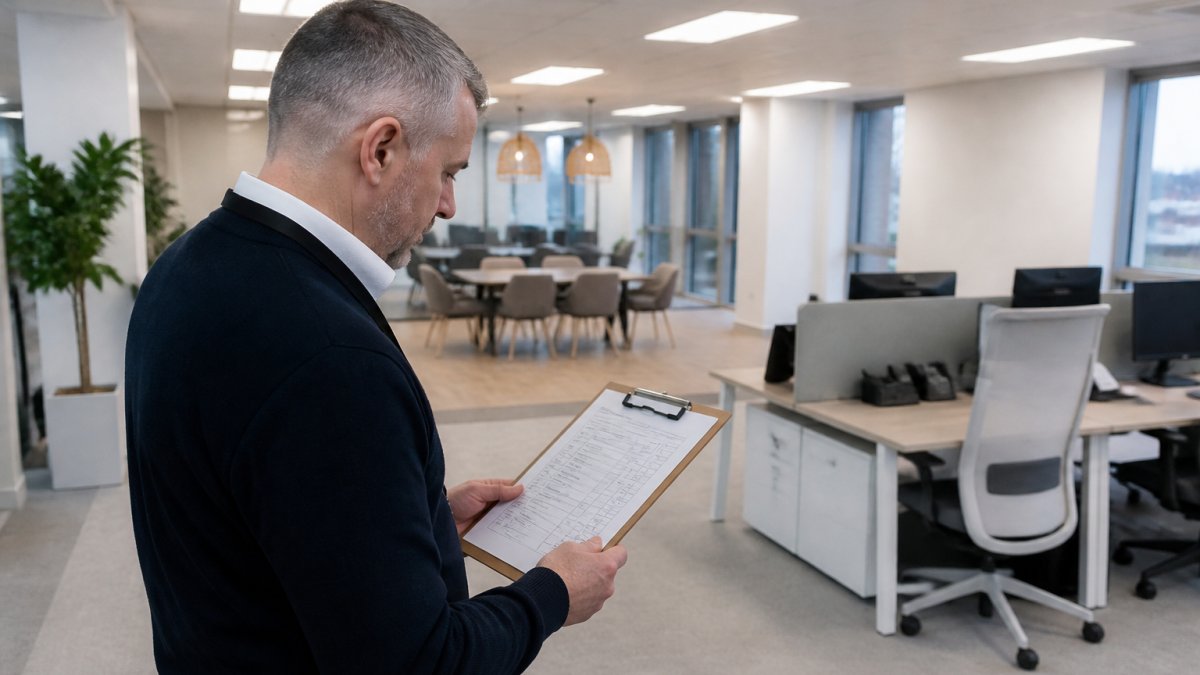
Inspect your office regularly. Don’t wait for complaints. Walk through spaces weekly and check against your cleaning checklist.
What to look for during inspection:
- Dust on surfaces and equipment
- Marks or stains on walls, floors, or furniture
- Clutter in storage areas
- Odours in bathrooms or kitchens
- Sticky or grimy floors
- Fingerprints on glass or handles
Use a simple scoring system: tick off completed tasks, note any issues, and photograph problem areas if needed. This creates a record and gives cleaners specific feedback.
Recording and Feedback
Keep a log of inspections. Record what was clean, what needed attention, and what was corrected. Share this feedback with whoever manages cleaning, whether that’s an in-house supervisor or an external contractor.
Feedback should be specific, not vague:
- GOOD: “The kitchen floor had sticky patches near the sink on Tuesday. It was cleaned on Wednesday and looks better.”
- VAGUE: “The kitchen isn’t clean enough.”
When standards slip, address it quickly. A conversation about what went wrong is better than letting standards deteriorate further.
Managing Cleaning Contracts Effectively
If you outsource cleaning, the contract is your control mechanism. It defines what “clean” means, what happens if standards slip, and how disputes are resolved.
Setting Clear Expectations
Your contract should specify:
- What tasks are included (daily, weekly, monthly)
- Where cleaning happens (specific rooms or the whole building)
- When cleaning happens (time of day, days of the week)
- Quality standards (what “clean” looks like)
- How absences are covered and how quickly
- Response times if issues are reported
- How often you’ll inspect and provide feedback
The vaguer your contract, the more room there is for misunderstanding. Be explicit about what you’re paying for.
Regular Communication
Meet with your cleaning contractor monthly. Review inspection reports. Discuss what’s working and what needs to change. A good contractor welcomes this feedback and uses it to improve.
For commercial office cleaning, regular communication prevents small problems from becoming big ones. If your contractor isn’t responsive to feedback, that’s a sign to reconsider the relationship.
Training Your Cleaning Team
Whether your team works in-house or you’ve outsourced to a contractor, training matters. Cleaners need to understand not just what to do, but why it matters and how to do it well.
Training should cover:
- Health and safety basics (safe use of chemicals, manual handling, hazard awareness)
- Your specific cleaning checklist and standards
- How to use equipment correctly
- What to do if they spot damage or hazards
- Who to contact if they have questions or concerns
New cleaners should shadow an experienced cleaner for at least one full shift. This shows them how tasks are actually done in your space, not just in theory.
Document your training. Keep records of who was trained, when, and on what. This protects you if questions arise later about whether standards were properly communicated.
Handling Common Challenges
Three challenges come up repeatedly when maintaining cleaning standards in offices.
Challenge 1: Staff turnover
Cleaning staff change frequently. Each new cleaner brings different standards and habits. Combat this by having a strong induction process and clear documentation. Don’t assume new staff know how you want things done.
Challenge 2: Budget pressure
When budgets tighten, cleaning is often cut first. But poor cleaning damages your reputation faster than most cost-cutting measures. Instead of cutting cleaning entirely, reduce frequency slightly or negotiate better rates with your contractor. Maintain quality even if you clean fewer times per week.
Challenge 3: Inconsistent feedback
If different managers give different feedback (“I like it this way, but my colleague prefers it that way”), cleaners get confused. Establish one standard, document it, and stick to it. Everyone, managers and cleaners, should follow the same checklist.
Maintaining cleaning standards in offices requires systems, not just good intentions. A clear checklist, a realistic schedule, active monitoring, and regular feedback create the conditions for consistent cleanliness. Whether you manage cleaning in-house or work with an external contractor, these principles apply.
For facilities managers in Chester and the surrounding area facing recruitment challenges or staff absences, Nirvana Managed Services LTD provides fully managed cleaning and caretaking services. We handle recruitment, contract management, and cover for absent staff, so your office maintains its standards even when your team can’t. Get in touch to discuss how we can support your facilities.
Frequently Asked Questions
How do you maintain cleaning standards in an office?
Maintaining cleaning standards in offices requires a structured approach: create a detailed cleaning checklist covering daily, weekly and monthly tasks; establish a consistent schedule; assign clear responsibility; conduct regular inspections; document findings; and provide ongoing staff training. Quality control is essential, monitor compliance through spot checks and feedback loops. When managing cleaning contracts, set expectations upfront in writing and communicate regularly with your cleaning team or contractor to address issues promptly.
What should an office cleaning checklist include?
An effective office cleaning checklist should cover: daily tasks (emptying bins, wiping desks, vacuuming high-traffic areas), weekly tasks (deep cleaning bathrooms, mopping floors, sanitising surfaces), and monthly tasks (window cleaning, carpet shampooing, light fixture cleaning). Include specific areas often overlooked: light switches, door handles, kitchen appliances, and upholstered furniture. Assign responsibility by area or role, and include sign-off boxes so staff confirm completion. Tailor the checklist to your office layout and use patterns.
How often should an office be professionally cleaned?
Most offices benefit from daily cleaning of high-traffic areas, bathrooms and kitchens, with weekly deep cleaning of carpets and detailed surface work. The frequency depends on your office size, foot traffic, and industry standards. Small offices might need daily tidying and twice-weekly deep cleans, whilst larger commercial spaces often require daily professional teams. During staff absences, maintaining the schedule becomes critical, plan cover in advance or use a managed service to prevent standards slipping.
What are the most important office cleaning standards?
Key standards include: bathrooms must be cleaned and sanitised daily; kitchens require daily deep cleaning; carpets and hard floors need regular vacuuming and mopping; all surfaces must be dust-free and sanitised; bins must be emptied daily; and clutter must be managed. Health and safety is paramount, ensure cleaning products are stored safely and staff are trained in their proper use. Document your standards in writing so everyone understands expectations, and review them regularly to ensure they remain relevant.