Table of Contents
- What Contract Cleaning for Office Buildings Actually Covers
- Creating an Office Cleaning Contract Specification
- Designing an Office Cleaning Schedule That Works
- Building Your Office Cleaning Checklist
- Office Cleaning Staff Cover and Continuity
- Evaluating and Selecting a Cleaning Provider
- Common Mistakes When Outsourcing Office Cleaning
- Frequently Asked Questions
Last Updated: October 8, 2026
What Contract Cleaning for Office Buildings Actually Covers
Contract cleaning for office buildings is the outsourced provision of cleaning and maintenance services under a formal agreement between your business and a professional cleaning provider. The scope of this service varies significantly depending on what you actually need cleaned and how often.
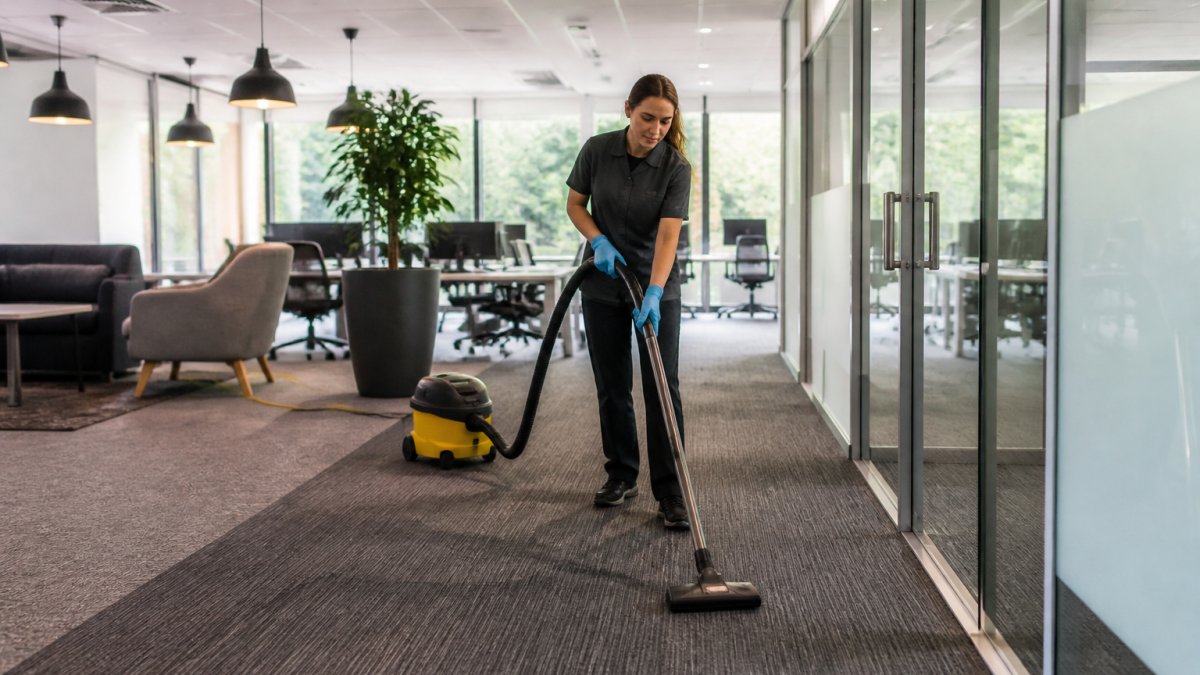
Most contract cleaning for office buildings encompasses daily or weekly floor cleaning, toilet sanitation, waste removal, and surface disinfection. But the detail matters enormously. A basic contract might cover vacuuming carpets and emptying bins. A comprehensive one includes window cleaning, deep sanitisation of high-touch surfaces, carpet shampooing on rotation, and emergency response when staff call in sick. The difference between these two isn’t just about price, it’s about whether your offices look professional when clients walk through the door.
The critical thing most businesses miss is that contract cleaning for office buildings isn’t one-size-fits-all. A tech startup with 20 people needs something entirely different from a multi-floor corporate building with 200 staff. Your specification should reflect your actual footfall, your client-facing areas, and your risk tolerance around hygiene standards.
Creating an Office Cleaning Contract Specification
Your specification is the foundation of everything that follows. Without it, you’re essentially asking a cleaning provider to guess what matters to you, and they’ll guess conservatively, which usually means you get less than you need.
Start by mapping your building room by room. Note the floor type in each space: carpet requires different treatment than hard flooring. Identify high-traffic zones versus quiet areas. Mark any specialised spaces like server rooms, kitchens, or meeting areas that need particular attention. Then document your current issues. Are toilets consistently dirty by mid-afternoon?
Next, define frequency. Daily cleaning works for high-traffic office buildings, but many smaller operations run on twice-weekly or weekly schedules. The specification should state exactly which tasks happen on which days. For instance: “Daily: empty all bins, vacuum high-traffic areas, sanitise toilet facilities.
Include standards. “Clean” is subjective. Better to write “floors must be free of visible debris and dust” or “toilets must be inspected hourly and cleaned immediately if soiled.” Reference industry standards where they exist, the British Institute of Cleaning Science publishes guidance on cleaning specifications that many providers recognise.
Finally, specify response protocols. What happens if someone calls in sick? How quickly can the provider send cover? How do you report issues, email, phone, online portal? Build these into the specification itself, not as an afterthought.
Designing an Office Cleaning Schedule That Works
The schedule you choose shapes your entire operation. Get it wrong and you’ll either pay for cleaning that happens when no one notices, or you’ll have dirty offices during business hours.
Most office buildings benefit from a split schedule: light cleaning during or after hours, and targeted deep cleaning on weekends or evenings. Daily tasks, bin emptying, toilet checks, vacuuming high-traffic areas, typically happen early morning (6-8am) or late afternoon (5-7pm). This keeps your spaces presentable without disrupting work.
Weekly deep cleaning of carpets, windows, and less-used areas works best outside core hours. Many businesses schedule this for Friday evenings or Saturday mornings. This gives you a fresh-looking building for Monday morning client visits.
The schedule should also account for seasonality and building use. If your office is quieter in summer or over Christmas, you might reduce frequency. If you host large client events, you’ll want cleaning scheduled before and after.
One practical consideration: coordinate with your own team. If your IT department needs server room access cleaned, they need to be present. If marketing wants the meeting rooms spotless for a big pitch, the schedule should reflect that. Build these dependencies into your specification from the start.
Building Your Office Cleaning Checklist
Your checklist is your quality control tool. Without it, you have no way to verify that the cleaning provider is actually doing what they promised. Most facilities managers create two checklists: one for routine daily tasks, and one for deeper weekly or monthly work.
Daily checklist items typically include:
- Toilets: toilets cleaned and disinfected, sinks wiped, mirrors polished, waste bins emptied
- Floors: visible debris removed, high-traffic areas vacuumed or swept
- Kitchens: surfaces wiped, appliances cleaned, waste disposed of
- Bins: all waste receptacles emptied and liners replaced
- High-touch surfaces: door handles, light switches, handrails disinfected
Weekly or monthly checklist items might cover:
- Carpet shampooing or deep cleaning in designated areas
- Window cleaning inside and out
- Skirting boards and skirting boards wiped down
- Kitchen appliances deep cleaned
- Toilet grout and tile deep sanitised
The checklist should be specific enough that someone unfamiliar with your building could follow it. “Clean the toilets” is too vague. “Clean and disinfect all toilet bowls, seats, and cisterns; wipe down all external surfaces including the base; mop the floor” is actionable.
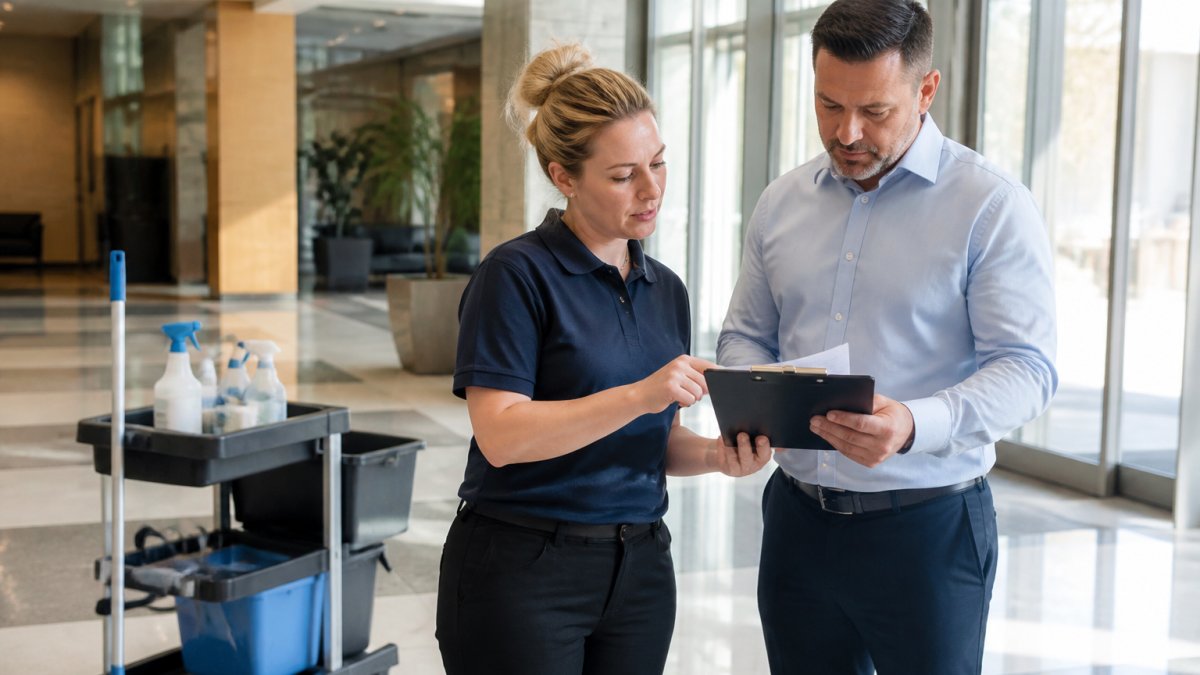
Assign someone on your team, typically a facilities manager or office manager, to spot-check the checklist weekly. This doesn’t mean inspecting every corner, but walking through key areas and noting whether standards are being met. If they’re not, raise it immediately with your cleaning provider rather than letting issues compound.
Office Cleaning Staff Cover and Continuity
This is where many outsourcing arrangements fall apart. A cleaning provider can have an excellent schedule on paper, but if their staff call in sick without cover, you’re left with a filthy building and no warning.
When you’re evaluating contract cleaning for office buildings, ask specifically about their staffing model. Do they have a dedicated team assigned to your building, or a pool of staff they rotate? Do they have backup cover arrangements? What’s their average staff turnover? How quickly can they deploy someone if a team member is absent?
The best providers maintain a small buffer of trained staff available for same-day cover. This means if your regular cleaner is ill, a replacement can be on site within a few hours. Some providers maintain dedicated teams for regular clients, which builds continuity and familiarity with your building’s specific needs.
Continuity matters more than most businesses realise. A regular cleaner learns the quirks of your building: which areas get dirtiest, which surfaces need gentler treatment, where the light switches are that clients always touch. When you rotate staff constantly, you lose that knowledge and quality dips.
Include staffing continuity in your specification. Request a named lead cleaner or small dedicated team. Ask how many times per year staff typically change. Agree on notice periods if either party wants to change the arrangement. Build cover protocols into your contract so you’re not scrambling when someone calls in sick.
Evaluating and Selecting a Cleaning Provider
Choosing the right provider for contract cleaning for office buildings is less about finding the cheapest option and more about finding someone who understands your specific needs and can deliver consistently.
Start by defining your evaluation criteria. Beyond price, consider: track record with similar-sized buildings, responsiveness to issues, flexibility around scheduling changes, staff continuity, and their approach to quality assurance.
Request references from at least three current clients with buildings similar in size and type to yours. Ask those references specific questions: Do staff show up reliably? How quickly do they respond when issues are raised? Have they had to use emergency cover?
Interview potential providers about their systems. Do they use scheduling software you can access? Can they provide weekly quality reports? How do you raise issues, email, phone, portal? What’s their process for handling complaints?
Ask about their approach to training and quality. Do they train staff on your specific building requirements? Do they conduct spot-checks? How do they handle staff turnover, is there an onboarding process for new team members assigned to your building?
Pricing should be transparent. A reputable provider will give you a detailed quote breaking down what’s included: frequency of service, specific tasks, any extras like window cleaning or carpet shampooing, and what happens if you need emergency cover.
Common Mistakes When Outsourcing Office Cleaning
Most facilities managers make at least one of these mistakes when they first outsource. Knowing what to avoid will save you time, frustration, and money.
The biggest mistake is not having a detailed specification before you approach providers. This forces you to negotiate scope during the contract, when you have less leverage. You end up with a vague agreement that’s open to interpretation, and disputes follow.
The second mistake is choosing based purely on price. The cheapest provider usually cuts corners somewhere, either in staff training, frequency of service, or quality standards.
A third common error is not building in a probation period. Even with references and interviews, you won’t know how a provider performs until they’re actually cleaning your building.
Many businesses also fail to communicate their standards clearly to the cleaning team. The provider’s manager understands your requirements, but the person actually cleaning your toilets might not. Invest time in a proper handover with the team who’ll be doing the work.
Finally, don’t ignore issues in the hope they’ll improve. If cleaning standards drop, raise it immediately with the provider. Most quality issues can be fixed quickly if caught early, a retraining session, a schedule adjustment, or additional resources.
Outsourcing contract cleaning for office buildings should reduce your headaches, not create new ones.
If recruitment or staff continuity has been a challenge, Nirvana Managed Services LTD offers a fully managed approach to contract cleaning for office buildings. We handle the recruitment, training, scheduling, and emergency cover, so you don’t have to.
Frequently Asked Questions
What is included in a contract cleaning service for an office?
Contract cleaning for office buildings typically includes daily or scheduled floor cleaning, toilet sanitisation, waste removal, surface dusting, and carpet care. Services vary by specification but usually cover common areas, corridors, and client-designated zones. More comprehensive contracts add window cleaning, deep cleans, or specialist treatments. Your specification document defines exactly what’s included, frequency, and quality standards.
How should an office cleaning contract specification be structured?
A strong office cleaning contract specification lists specific tasks (floor types, toilet protocols, waste schedules), frequency (daily, weekly, or bespoke), quality standards (cleanliness benchmarks, inspection procedures), areas covered, equipment provided, and staff requirements. Include details like access times, key handover procedures, and how issues are reported. This removes ambiguity and protects both parties by defining exactly what ‘clean’ means for your building.
What happens if an office cleaning staff member is off sick?
Without a managed cover arrangement, a sick cleaner leaves your office uncovered until they return or a replacement is found. This disrupts standards and affects staff morale. A contract cleaning provider with built-in staff cover ensures continuity by deploying trained backup staff immediately. This is essential for maintaining hygiene standards and preventing the gaps that damage your workplace environment and employee experience.
How often should an office be professionally cleaned?
Most offices require daily cleaning of high-traffic areas (toilets, kitchens, lobbies) and 2-3 times weekly for desks and general spaces. The right frequency depends on occupancy, foot traffic, and industry standards. A professional provider will assess your building layout and usage patterns to design a schedule that maintains standards without over-servicing. Your cleaning schedule should balance hygiene requirements with operational efficiency.
What should an office cleaning checklist include?
An effective office cleaning checklist covers toilet deep-clean items (toilets, sinks, mirrors), floor care by surface type, waste and recycling management, kitchen sanitisation, common area surfaces, and any specialist tasks. Include frequency notes, product specifications if required, and sign-off procedures. A detailed checklist ensures consistency across shifts and gives staff clear, measurable targets. It also provides proof of completion for compliance and quality assurance.
How do I choose a commercial office cleaning company?
Evaluate providers on their experience with buildings your size, track record with similar clients, staff training standards, quality assurance processes, and ability to provide continuity cover. Request references and ask about their specification process and how they handle issues. Assess whether they understand your building’s layout, occupancy patterns, and any specialist cleaning needs. The right provider should be willing to invest time understanding your requirements before quoting.
Can one cleaning provider cover offices in Chester and Wrexham?
Yes, many established cleaning providers operate across Chester and Wrexham, managing multiple sites with coordinated teams and scheduling. This can simplify management if you operate buildings in both areas, as you have one point of contact, consistent standards, and shared resources for cover arrangements. Confirm the provider has local capacity, understands both areas’ access requirements, and can guarantee continuity if staff are unavailable.