
Last Updated: 24 November 2026
Quick Summary
Professional cleaning improves your office environment by keeping desks, washrooms and kitchens clean and hygienic, which helps staff focus, stay healthy and feel more settled at work. A consistent schedule, with daily cleaning of high-touch surfaces and periodic deep cleaning, makes the biggest difference.
- Clean high-touch surfaces such as door handles, keyboards and phones every day.
- Match cleaning frequency to how busy each area is, rather than cleaning everything equally.
- Provide wipes or sanitiser at shared desks so staff can clean between users.
- Ask providers for a written scope, insurance details and references before you commit.
- Start with a trial period to check standards before signing a longer contract.
Table of Contents
- Why the Office Environment Affects Productivity and Health
- How Professional Office Cleaning Changes the Workplace
- Office Cleaning Best Practices for Shared Workspaces
- How Often Should an Office Be Cleaned?
- Office Cleaning Checklist for Daily and Weekly Routines
- Choosing a Commercial Office Cleaning Provider in Chester and Wrexham
- Step 1: Define the Scope Before You Compare Providers
- Step 2: Check Training, Insurance and References
- Step 3: Agree Quality Checks and Communication
- Step 4: Confirm Staff Consistency and Flexibility
- Step 5: Review Costs Transparently
- Step 6: Start With a Trial Period
- Managing the Provider After You Start
- Measuring Results and Getting Your Office Cleaning Plan Started
- Frequently Asked Questions
Why the Office Environment Affects Productivity and Health
Your office environment shapes how your staff think, feel and perform every working day.
Many office managers underestimate how much the physical space affects daily work. Clutter, dirty surfaces and poor air quality can make a room feel tired and unwelcoming.
Here is what a well-maintained office environment typically supports:
- Focus: Clear desks and tidy floors reduce visual distractions.
- Health: Regular removal of dust and allergens can ease symptoms for sensitive staff.
- Hygiene: Cleaning high-touch surfaces lowers the spread of common germs.
A common mistake is treating cleaning as an afterthought. When cleaning is irregular or done in a rush, the gaps show.
How Professional Office Cleaning Changes the Workplace
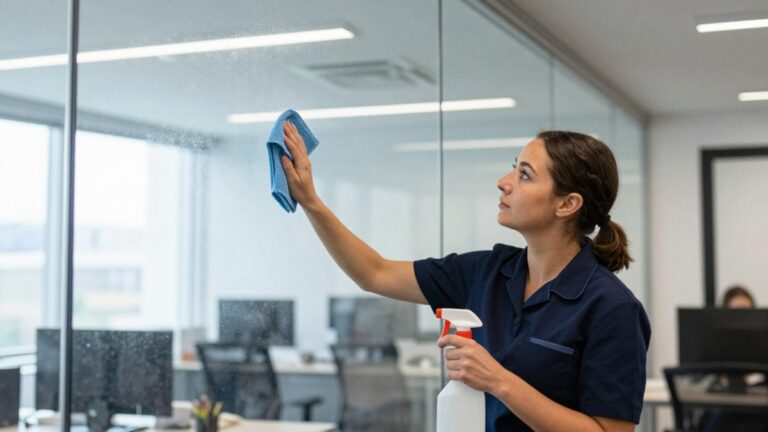
Professional office cleaning goes beyond a quick tidy at the end of the day. A trained team follows a set schedule, uses the right products for each surface, and checks the results.

In practice, a professional service usually covers:
- Dusting desks, shelves and monitors
- Vacuuming carpets and sweeping hard floors
- Cleaning kitchens, washrooms and break areas
Once a routine is in place, you tend to see fewer complaints and a more settled atmosphere. Staff spend less time working around mess and more time on their actual work.
Office Cleaning Best Practices for Shared Workspaces
Shared workspaces need more attention than private offices. Hot desks, meeting rooms and kitchens are used by many people, so germs and dirt build up faster. Good practice here focuses on the places people touch most.
Start with these priorities:
- Clean high-touch surfaces daily. Focus on door handles, light switches, keyboards, phones and tap handles.
- Provide cleaning supplies. Wipes and sanitiser at shared desks let staff clean their own space between users.
- Keep kitchens clear. Empty fridges and clean microwaves regularly to avoid odours and spills.
- Review meeting rooms after use. Tables, chairs and whiteboards should be wiped down before the next booking.
Clear rules help too. Ask staff to clear their desks at the end of the day so cleaners can reach every surface.
How Often Should an Office Be Cleaned?
Most offices benefit from a mix of daily, weekly and periodic cleaning, but the right frequency is not a fixed rule. It depends on how many people use the space, how busy it is, how much foot traffic comes through the door, and the types of surfaces and flooring you have.
A busy office with many visitors usually needs daily cleaning of high-use areas. A quieter office may manage with a lighter daily routine and a more thorough weekly clean.
Daily, Weekly and Deep Cleaning Tasks
Daily tasks keep the office presentable and hygienic:
- Empty bins and replace liners
- Wipe down desks, phones and keyboards
- Clean washrooms and restock supplies
Weekly tasks go deeper:
- Dust shelves, skirting boards and window ledges
- Clean glass, doors and internal windows
- Mop hard floors thoroughly
Deep cleaning is done periodically, such as every few months. It includes carpet cleaning, upholstery cleaning, and detailed work on areas that routine cleaning does not reach. In older premises, pay particular attention to high-level dusting, window frames and any original features that collect dust.
A Practical Cleaning Schedule by Office Size and Working Pattern
Use the following as a starting point and adapt it to your building. The aim is to match frequency to how each area is used, not to clean everything at the same interval.
| Area | Small office (up to 10 desks) | Medium office (11-50 desks) | Large office (50+ desks) |
|---|---|---|---|
| Desks and shared workstations | Daily wipe of high-touch points; full clean weekly | Daily wipe; full clean twice weekly | Daily wipe; full clean daily in hot-desk areas |
| Washrooms | Daily clean and restock | Daily clean and restock; mid-day check | Daily clean and restock; mid-day and afternoon checks |
| Kitchen and break areas | Daily surfaces; weekly fridge clean | Daily surfaces; twice-weekly fridge clean | Daily surfaces; daily fridge check; weekly deep clean |
| Meeting rooms | Wipe after each use; weekly full clean | Wipe after each use; daily full clean | Wipe after each use; daily full clean; periodic upholstery clean |
| Entrance and reception | Daily sweep or vacuum; weekly mop | Daily sweep or vacuum; daily mop | Daily sweep or vacuum; daily mop; periodic entrance mat clean |
| Carpets and upholstery | Periodic deep clean every 6-12 months | Periodic deep clean every 6-12 months | Periodic deep clean every 3-6 months |
This schedule is a guide, not a rigid rule.
Watch out: reducing cleaning frequency in shared areas to save time often leads to complaints and a drop in perceived standards, so it is usually better to reduce scope in low-use areas first.
Adjusting for Hybrid Working and Shared Desks
Hybrid working can change how often an office needs cleaning. If staff are in two or three days a week, daily cleaning of every desk may be unnecessary, but shared desks and meeting rooms need more attention because they are used by different people. A common pattern is to clean shared desks and touchpoints daily, clean private desks on the days they are used, and carry out a full clean of the whole office once or twice a week.
Local Considerations for Chester and Wrexham Offices
Offices can differ widely in age and layout, and each brings different cleaning considerations. Older buildings may have original windows, stone floors or period features that need gentle products and careful methods. Newer offices often have large glass areas, open-plan layouts and shared facilities, which means more high-touch surfaces and a greater need for daily touchpoint cleaning. A provider that assesses your building can advise on products and methods suited to it.
Office Cleaning Checklist for Daily and Weekly Routines
A simple checklist keeps everyone on the same page and makes it easy to spot gaps. Use this as a starting point and adapt it to your building.
Daily checklist
- Empty all bins
- Wipe high-touch surfaces
- Clean and restock washrooms
Weekly checklist
- Dust all surfaces, shelves and ledges
- Mop all hard floors
- Clean glass and doors
Checking the list at the end of each week helps you catch problems early. Staff feedback is useful here, as they often notice what the cleaning team misses.
Choosing a Commercial Office Cleaning Provider in Chester and Wrexham
If you run a business in Chester or Wrexham, choosing the right commercial office cleaning provider matters. Commercial office cleaning can be arranged to suit offices of different sizes, from small teams to larger buildings. The following practical steps help you assess providers on more than price alone.
Step 1: Define the Scope Before You Compare Providers
Before you contact any provider, write down what you need cleaned, how often and any constraints. A clear scope makes it easier to compare quotes fairly and reduces the risk of important tasks being left out. Include:
- The areas to be cleaned (desks, washrooms, kitchens, meeting rooms, reception, stairwells)
- How often each area needs cleaning
- Any preferred cleaning times (before, during or after office hours)
A common mistake is signing up based on price alone, only to find that important tasks were left out of the scope. A written scope agreed in advance helps prevent that.
Step 2: Check Training, Insurance and References
Ask each provider how their staff are trained and whether they hold relevant insurance. A professional provider should be able to explain their training approach and provide evidence of insurance cover. Ask for references from similar offices and, where possible, speak to those clients about reliability and standards. A provider that is reluctant to share references or insurance details is worth questioning.
Step 3: Agree Quality Checks and Communication
Ask how the provider checks and records the work. A simple quality check might involve a supervisor signing off a checklist after each visit, or periodic audits against an agreed standard. Agree how you will report issues and how quickly the provider will respond. Clear communication channels and a named contact make it easier to resolve problems before they become complaints.
Step 4: Confirm Staff Consistency and Flexibility
Regular cleaners learn your office and maintain standards better than a rotating team. Ask whether you will have consistent staff and what happens during holidays or sickness. Also confirm flexibility: cleaning may need to happen before, during or after office hours, and your needs may change with seasons or business peaks. A provider that can adapt without renegotiating the whole contract is easier to work with.
Step 5: Review Costs Transparently
Pricing depends on the size of the office, how often you need cleaning and the tasks involved. Ask for a clear breakdown of what is included so you can compare like for like. For current prices or a quote, contact Nirvana Managed Services LTD through its website. Avoid providers who will not put the scope and price in writing, as this often leads to disputes later.
Step 6: Start With a Trial Period
A trial period lets you assess standards before committing to a longer contract. Agree in advance what will be reviewed at the end of the trial, such as checklist completion, complaint levels and staff feedback.
Watch out: a provider that offers a very low price may be cutting corners on training, insurance or supervision, so check these points before signing.
Managing the Provider After You Start
Once a provider is in place, keep the relationship working with regular reviews. Hold a short monthly check-in to discuss any issues, review the checklist and confirm upcoming changes. Share staff feedback promptly and give the provider a chance to respond. A good provider will welcome this and use it to improve. Keep a simple record of issues and how they were resolved so you can spot patterns and address them at contract review.
Measuring Results and Getting Your Office Cleaning Plan Started
Once your cleaning plan is in place, check whether it is working. Simple measures help you see the difference. Track staff feedback, the number of cleaning issues reported, and how often reactive jobs are needed.
To get started:
- Walk through your office and note the areas that need the most attention.
- Decide how often each area should be cleaned.
- Agree on a checklist and a clear scope of work with your provider.
- Review results after the first month and adjust as needed.
A well-planned routine makes your office a better place to work, and it does not have to be complicated. For help setting up a professional cleaning plan for your office, get in touch with Nirvana Managed Services LTD to talk through your needs.
Frequently Asked Questions
How does professional cleaning improve an office environment?
Professional cleaning removes dust, allergens and germs from high-touch surfaces, carpets and washrooms, which helps keep indoor air cleaner and reduces the spread of illness. A tidy, organised workspace also means fewer distractions and a more professional impression for staff and visitors. Pricing and scope depend on the size of the premises and how often cleaning is needed, so contact Nirvana Managed Services LTD through its website for a tailored quote.
How often should an office be professionally cleaned?
Most offices benefit from daily cleaning of washrooms, kitchens, entrance areas and high-touch surfaces, with weekly tasks such as vacuuming, dusting and mopping, and periodic deep cleaning of carpets and windows. The right frequency depends on footfall, the number of people using shared spaces and the type of work carried out. A provider can recommend a schedule once it has assessed your premises.
What should an office cleaning checklist include?
A practical office cleaning checklist covers high-use areas such as desks, door handles, light switches and shared equipment, along with washrooms, kitchens, floors and bins. Each task should have a set frequency, a named responsible person and a simple sign-off so that gaps are easy to spot. Reviewing the checklist with staff feedback every few months helps keep standards consistent.
How do you choose a commercial office cleaning company in Chester or Wrexham?
Look for a provider that visits your site to assess its size, layout and working patterns, and that gives a clear scope of work in writing. Ask how cover is arranged when a cleaner is off sick, how quality is checked and how feedback is handled. Nirvana Managed Services LTD offers commercial cleaning for offices and can be contacted through its website for current prices or a quote.