Last Updated: November 20, 2026
Quick Summary
A school cleaning quality assurance inspection is a structured site visit that checks whether cleaning work meets an agreed standard. It shows what has been done, how well it was done, and what still needs attention, turning a general sense that the school looks clean into evidence you can act on.
- Build a checklist by splitting the school into zones and listing tasks, frequencies and standards for each.
- Washrooms and high-touch surfaces need the most attention, as they are most visible to parents and inspectors.
- Use a 1-5 scoring scale with clear descriptors, weighting washrooms and kitchens more heavily than corridors.
- Treat critical hygiene failures differently from cosmetic issues, with reinspection within 24 hours for critical ones.
- Track scores over time to inform contract management and corrective actions with deadlines.
Table of Contents
- What a School Cleaning Quality Assurance Inspection Covers
- Building a School Cleaning Inspection Checklist
- What Inspectors Look For During a Site Visit
- Setting Up a School Cleaning Audit Template With Transparent Scoring
- How Often Cleaning Quality Assurance Inspections Should Happen
- Managing School Cleaning Contracts Through Inspection Results
- Booking Your First Quality Assurance Review With Nirvana Managed Services
- Frequently Asked Questions
What a School Cleaning Quality Assurance Inspection Covers
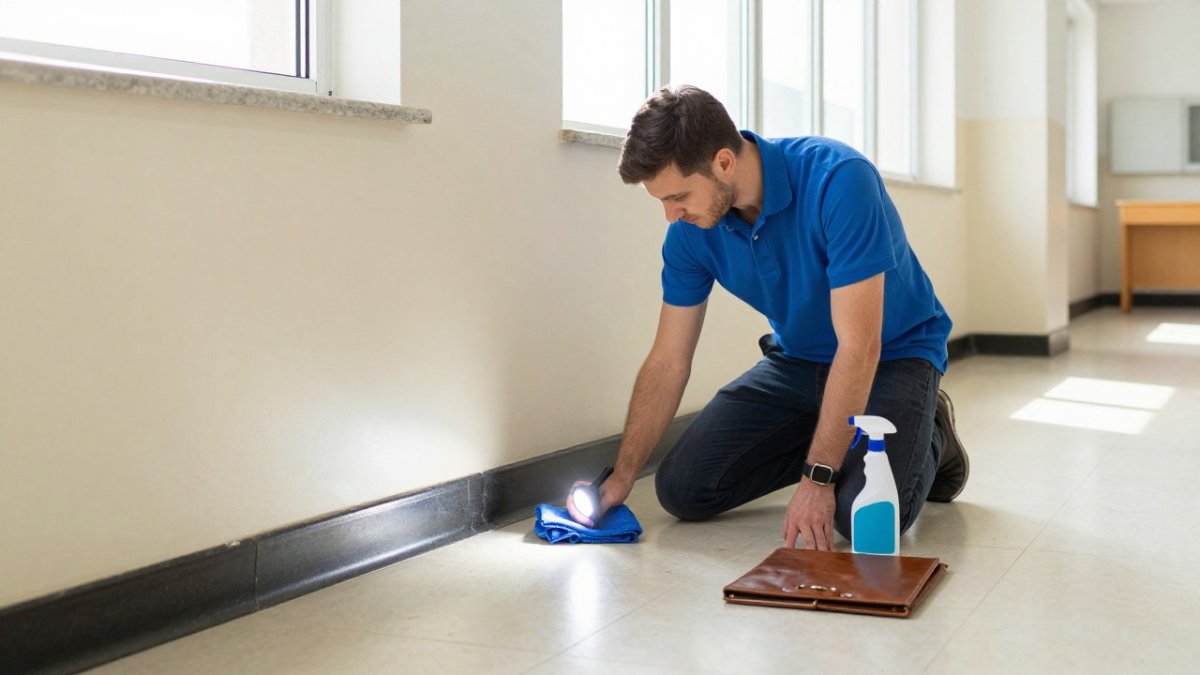
School cleaning quality assurance inspections are structured site visits that check whether cleaning work meets an agreed standard. A cleaning quality assurance inspection looks at what has been done, how well it was done, and what still needs attention. For most school leaders, it is the simplest way to turn “the school looks clean” into evidence you can act on.
Problems often hide in the places nobody checks daily, such as behind doors, under desks and inside washrooms at the end of a busy week.
A typical inspection covers:
- Classrooms: surfaces, floors, bins and high-touch points
- Common areas: corridors, halls, reception and staff rooms
- Washrooms: sanitation, supplies and odour control
- Outdoor and entry points: doors, handles and external bins
Where cleaning staff are absent or the contract is stretched, these checks show gaps early. That gives you time to act before parents, pupils or inspectors notice.
Building a School Cleaning Inspection Checklist
A good checklist turns a vague standard into specific tasks. Write it so any trained supervisor could use it and reach the same result.
Start with these steps:
- Split the school into zones, such as classrooms, corridors and washrooms.
- List the tasks for each zone, with a clear frequency (daily, weekly or termly).
- Note the standard for each task, such as “floor free of debris and wet spills”.
- Add a space for comments and photographs where evidence matters.
- Review the checklist each term and adjust it to match what the building needs.
Keep the language plain. A checklist that needs a manual to read will not get used.
Classroom and Common Area Checks
Classrooms and shared spaces take the heaviest daily use, so they need the most detailed checks. Focus on what pupils and staff touch and walk on.
Check these items during each visit:
- Desks, chairs and tables are wiped and free of marks
- Floors are swept or cleaned with no visible debris
- Bins are emptied and liners replaced
- Light switches, door handles and window sills are clean
- Whiteboards and display boards are free of residue
Corridors and halls need extra attention after lunch and break times. A quick walk-through at those points often catches problems that a morning-only check misses.
Washroom Hygiene and High-Touch Surfaces
Washrooms are where cleaning quality is most visible to parents and inspectors. They are also where hygiene failures cause the most complaints.
Check these points:
- Toilets, sinks and taps are cleaned and free of limescale or staining
- Soap, paper towels and hand sanitiser are stocked
- Floors are dry and not slippery
- Mirrors and partitions are clean and streak-free
- Odour is controlled and bins are emptied regularly
High-touch surfaces, such as door handles, light switches, taps and rails, should be cleaned on a set schedule during the school day, not just at night. Record when this happens, because it is one of the first things an inspector asks about.
What Inspectors Look For During a Site Visit
Inspectors and auditors look for consistency more than perfection. A school that cleans well every day tends to score better than one that cleans hard before a visit and then slips.
They commonly look at:
- Evidence of routine: logs, sign-off sheets or digital records showing tasks were completed
- Condition of key areas: washrooms, kitchens and classrooms checked first
- Response to issues: how quickly reported problems were fixed
- Staff awareness: whether cleaners know the standard and the escalation route
- Health and safety: wet floor signs, chemical storage and safe access to equipment
Keep a visit file ready. It should hold your checklist, recent completed records and any corrective actions with dates. This gives a clear answer when someone asks how you know the standard is being met.
Setting Up a School Cleaning Audit Template With Transparent Scoring
An audit template makes quality measurable. The key is transparent scoring, so both the school and the cleaning provider know exactly how a result was reached. A simple 1-5 scale with clear descriptors is one common approach, and the real value comes from defining what each score means in practice and setting pass thresholds that separate critical hygiene failures from cosmetic issues.
Start by defining the scoring criteria for each zone. For example, a washroom might be scored as follows:
- 5 (Excellent): All surfaces clean and dry, no limescale or staining, supplies fully stocked, no odour, bins empty.
- 4 (Good): Minor dust in corners, supplies mostly stocked, slight odour but acceptable.
- 3 (Acceptable): Visible marks on mirrors, one supply item low, noticeable odour, bins half full.
- 2 (Poor): Staining on toilets or sinks, supplies missing, strong odour, bins overflowing.
- 1 (Unacceptable): Biohazard present, no soap or paper, floors wet and slippery, heavy odour.
Weight the most important areas more heavily. Washrooms and kitchens should carry double weight compared with corridors or offices, because hygiene failures there pose a direct risk to pupils and staff. A common pattern is to set a pass threshold of 80% overall, with no individual zone scoring below 3. This prevents a strong performance in low-risk areas from masking a critical failure in a washroom.
Distinguish critical hygiene failures from cosmetic issues. A critical failure, such as no soap in a washroom, visible faeces, or a blocked toilet, should trigger an immediate corrective action and a reinspection within 24 hours, regardless of the overall score. Cosmetic issues, such as scuff marks on a door or dust on a high shelf, can be logged for the next scheduled clean. Make this distinction explicit in your template so inspectors and cleaners alike understand the difference.
Record the date, the inspector, photographs and any actions agreed. A digital template, whether a simple spreadsheet or a dedicated app, makes it easier to attach dated photos and track corrective actions to completion. Paper templates work, but they are harder to search and share.
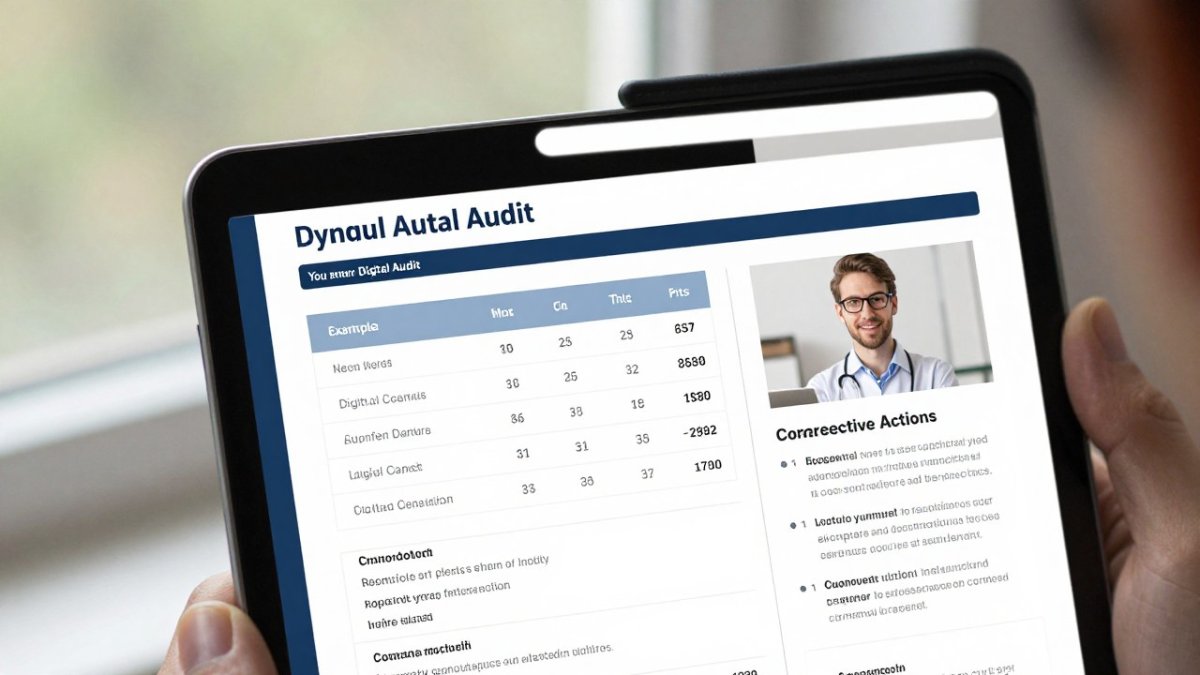
Share the scoring criteria with the cleaning team before the first audit. When people understand how they are judged, disputes fall sharply and improvements come faster. Watch out: if you introduce scoring without training the team on what a 3 versus a 4 looks like, you will get inconsistent results and eroded trust in the process.
How Often Cleaning Quality Assurance Inspections Should Happen
There is no single correct frequency. Many schools set a schedule based on risk, so higher-use areas are checked more often. A risk-based approach considers three factors: how heavily an area is used, how critical hygiene is in that area, and how well it performed in previous inspections.
A practical starting point is:
- Daily: a visual check of washrooms and food technology areas by the site supervisor, logging any immediate issues.
- Weekly: a short walk-through of high-traffic areas such as corridors, halls and reception, focusing on high-touch surfaces and bin levels.
- Monthly: a full scored audit of all zones using your template, with photographs and corrective actions recorded.
- Termly: a review of the checklist, scores and trends against the previous term, adjusting the schedule if needed.
Increase frequency after a poor result, during illness outbreaks or before key events such as Ofsted inspections. For example, if a washroom scores below 3, reinspect within 48 hours and then weekly until it achieves a 4 or above for two consecutive checks. Reduce frequency only when several results in a row are consistently strong, for instance, three consecutive monthly audits with scores above 85% and no critical failures.
Consider the school calendar. Schedule a full audit immediately before and after deep cleaning periods such as half-terms and summer holidays to capture the baseline and the result. During exam periods, some areas may be off-limits, so adjust your route and timing to avoid disrupting pupils.
Watch out: if you set a fixed monthly audit and never vary it, you may miss problems that arise between visits in high-risk areas. A risk-based schedule is more work to set up but catches issues earlier.
A risk-based schedule typically runs on four cycles, each with a different focus.
| Frequency | Who checks | Focus |
|---|---|---|
| Daily | Site supervisor | Washrooms and food technology areas |
| Weekly | Walk-through | High-traffic areas and high-touch surfaces |
| Monthly | Full scored audit | All zones, with photographs and corrective actions |
| Termly | Review | Checklist, scores and trends against last term |
Managing School Cleaning Contracts Through Inspection Results
Inspection results are most useful when they feed into contract management. Track scores over time, not just single visits, so you can see whether standards are improving or slipping.
Use the results to:
- Agree corrective actions with a clear deadline and a follow-up inspection
- Spot recurring problems that point to staffing, training or supply issues
- Review cover arrangements when absence affects the cleaning schedule
- Discuss performance trends at contract review meetings
When a cleaner is off sick, the standard should not drop. Ask any provider how cover is arranged and how quickly a replacement reaches the site. Without that answer, a single absence can undo a good month of results.
Pricing depends on the size of the site, the frequency of cleaning and the level of cover required. Contact Nirvana Managed Services LTD through our website for a quote tailored to your school.
Booking Your First Quality Assurance Review With Nirvana Managed Services
If you are not sure how your current cleaning standard compares, a first review is a sensible place to start.
Get in touch with Nirvana Managed Services LTD to arrange your first review, and we will help you put a clear, transparent inspection process in place for your school.
Frequently Asked Questions
What should a school cleaning quality assurance inspection include?
A school cleaning quality assurance inspection should cover classrooms, corridors, washrooms, kitchens, staff rooms and outdoor waste areas. Inspectors check floors, surfaces, high-touch points, bins and sanitation against a written checklist. Each area should receive a consistent score, and any failures should be recorded with photos, dates and the corrective action agreed. Clear evidence makes it easier to show that standards are being maintained over time.
How often should school cleaning be inspected?
Inspection frequency should reflect the risk level of each area and the volume of use. Washrooms and kitchens often warrant weekly checks, while classrooms and corridors may be reviewed fortnightly or monthly. Schools should also schedule a deeper review at the start and end of each term. A risk-based schedule keeps inspection effort focused where problems are most likely to appear.
How do schools record cleaning inspection results?
Results are best recorded on a standard audit template that lists each area, the criteria checked, the score given and any defects found. Digital forms make it easier to attach photos and track whether corrective actions were completed. Keeping dated records allows the school to spot recurring problems and to show evidence of ongoing monitoring when required.