
Table of Contents
- Why School Hygiene and Infection Control Matter
- Hand Hygiene in Schools: Foundation of Infection Prevention
- Developing a School Infection Control Policy
- School Cleaning Schedule and Protocols
- School Cleaning Checklist: Essential Areas and Frequency
- Environmental Cleaning and Disinfection Standards
- Managing Hygiene When Cleaning Staff Are Absent
- Respiratory Etiquette and Symptom Management
- Frequently Asked Questions
Last Updated: 12 October 2026
Why School Hygiene and Infection Control Matter
School hygiene infection control is non-negotiable.
At Nirvana Managed Services LTD, we work with schools across Chester and the wider region to build these systems.
Viruses, bacteria and parasites thrive in schools. Respiratory infections spread through droplets; gastrointestinal illnesses travel via contaminated surfaces and hands.
UK Health Security Agency guidance on preventing and controlling infections in schools provides the framework. But frameworks mean nothing without execution. That’s where most schools struggle.
Hand Hygiene in Schools: Foundation of Infection Prevention
Hand hygiene is the single most effective intervention you have, it costs almost nothing and needs no special equipment.
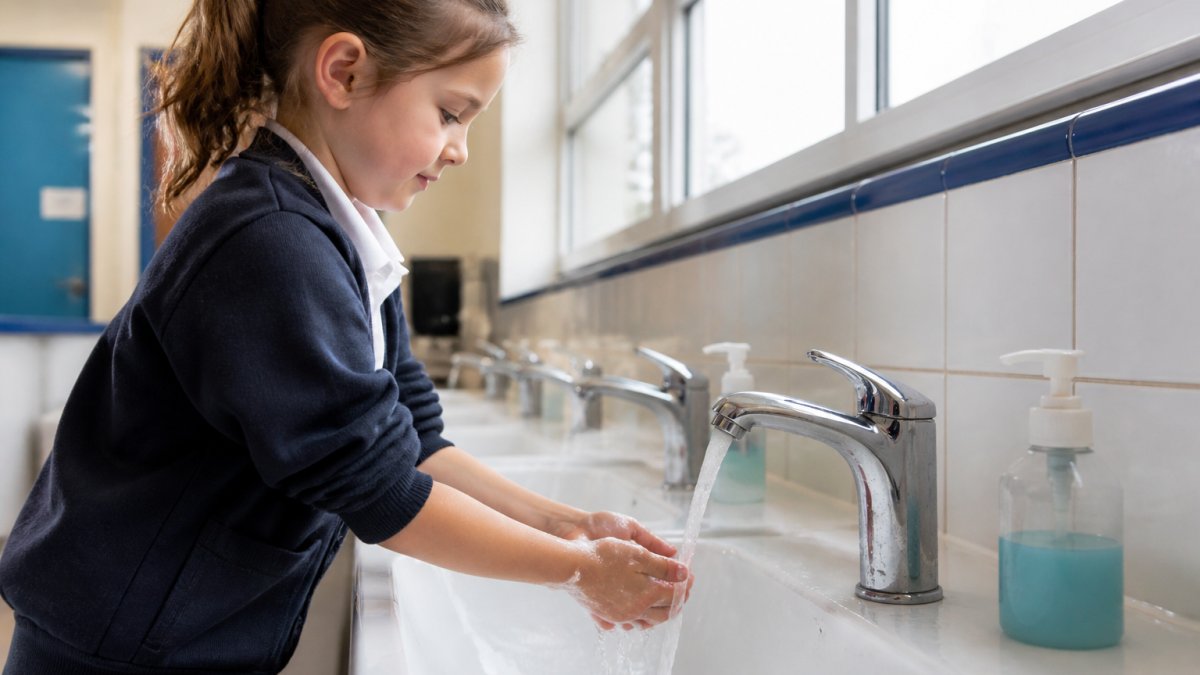
Hands are how infection travels: a child touches their nose, then a desk, then a peer’s hand, and the virus is in circulation.
The critical times are before eating, after using the toilet, after coughing or sneezing, before and after food preparation, after handling animals, and after playing outside.
Teaching Effective Handwashing Techniques
Handwashing isn’t intuitive, most people rinse for three seconds and call it done. Effective handwashing takes 20 seconds minimum, long enough to work soap between fingers, under nails and up the wrists.
Teach the technique explicitly: wet hands, apply soap, rub palms, backs of hands, between interlocked fingers, knuckles, thumbs and fingertips, then rinse and dry.
Make it visible: posters at every sink showing the steps, group practice, and timing, 20 seconds is longer than most people think. After a few repetitions it becomes automatic.
Hand sanitiser is a backup, not a replacement.
Hand Hygiene Stations and Accessibility
The biggest mistake is installing dispensers in the corridor and assuming that solves it, children won’t walk 30 metres to sanitise. Stations belong where people naturally pause: outside classrooms, beside the lunch hall, near the playground entrance, in toilets.
For younger children, install child-height sinks or sturdy step platforms, a five-year-old can’t reach an adult sink.
Stock soap and paper towels consistently, a school that runs out of soap has no hand hygiene programme, just empty dispensers.
Developing a School Infection Control Policy
A written policy on school hygiene infection control is your anchor: it sets expectations, assigns responsibility, and gives staff something to refer to. Most schools have one, most are too vague to be useful.
Your policy should answer: What do we do when someone shows symptoms? How long do they stay home? Who cleans contaminated areas? What’s our approach to high-touch surfaces? What happens when staff are absent?
Key Policy Components
Start with definitions. Most guidance says exclusion applies to fever (38°C or higher), persistent cough, loss of taste or smell, and difficulty breathing. Mild sniffles don’t trigger exclusion; high fever does.
Set exclusion periods: gastroenteritis, 48 hours after the last symptom; respiratory infections, until well enough to function normally in school; chickenpox, until all blisters have crusted over.
Define cleaning responsibilities. Daily: toilets, door handles, light switches, desks, lunch tables. Weekly: deep clean of floors, walls, soft furnishings. After contamination (vomit, blood, diarrhoea): immediate clean with appropriate disinfectant.
A vague policy that says “maintain high standards of cleanliness” means nothing. Staff won’t know what to do when a child is sick, and you’ll have inconsistent responses. Write specific actions and timelines.
Illness Reporting and Exclusion Guidelines
Document everything: who reported illness, what symptoms, when, and what action was taken.
The same applies to staff. If a cleaner calls in sick, you need cover, that’s where Nirvana Managed Services LTD helps schools in Chester and the surrounding areas, providing trained cover staff who follow your protocols.
Communicate clearly with parents. Send a note home when there’s a confirmed case: “We’ve had a case of gastroenteritis in Year 2. We’ve increased cleaning of high-touch surfaces.
School Cleaning Schedule and Protocols
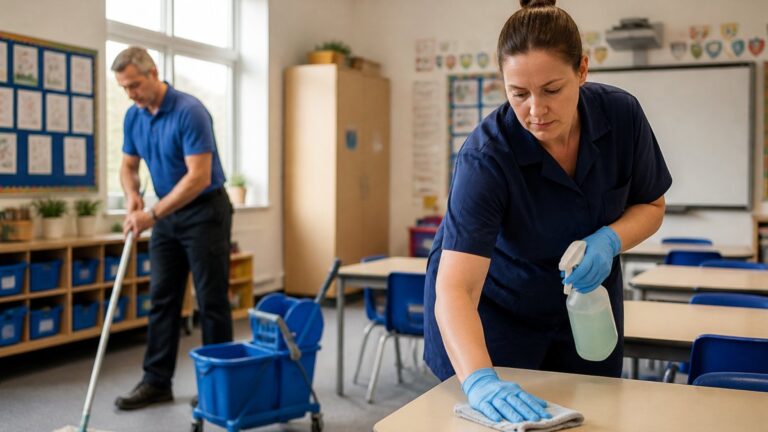
Cleaning is where policy becomes reality. A good schedule ensures nothing gets missed. A bad one means some areas are cleaned daily while others are forgotten for weeks.
Think about traffic patterns. High-touch surfaces, door handles, light switches, handrails, toilet seats, get contaminated constantly. They should be cleaned at least daily, ideally twice daily during illness seasons.
Toilets are critical, they’re where gastrointestinal viruses concentrate. Clean and disinfect toilets, sinks and floors daily; in primary schools with younger children, twice daily. Make it non-negotiable.
Daily and Weekly Cleaning Tasks
Daily:
- Toilets: clean and disinfect seats, bowls, flush handles, taps, sinks, floors
- Door handles: all doors, especially those leading to high-traffic areas
- Light switches: every room
- Desks and tables: especially lunch tables and shared work surfaces
- Handrails: stairs, corridors
- Playground equipment: if it’s used indoors (climbing frames, balance beams)
Weekly:
- Floors: deep clean, not just vacuuming
- Walls: wipe down marks and contamination
- Soft furnishings: cushions, bean bags, vacuum or wash if possible
- Bins: empty, clean, replace liners
- Shelving and storage: dust and wipe surfaces
Monthly:
- Carpets: professional steam clean if you have carpet areas
- Upholstered furniture: professional clean or replace if contaminated
- Vents and filters: check and clean air vents, replace HVAC filters
- Deep clean of storage areas, stockrooms, staff rooms
High-Touch Surface Priority Areas
Not all surfaces are equal, some get touched dozens of times per hour. Your priorities:
- Toilet seats, flush handles, taps, sinks (highest contamination risk)
- Door handles to toilets, classrooms, offices
- Light switches in high-traffic areas
- Handrails on stairs and in corridors
- Lunch tables and chairs
- Computer keyboards and mice if shared
- Playground equipment handles and railings
- Drinking fountain buttons
- Coat hooks and lockers in communal areas
During outbreaks, increase frequency: with gastroenteritis, toilets may need cleaning three times daily; with respiratory illness, door handles and light switches become critical.
Use a colour-coded cleaning system: different cloths or mop heads for different areas. Never use the same cloth on toilets and then on desks. Cross-contamination undoes all your work.
School Cleaning Checklist: Essential Areas and Frequency
A checklist is your operational tool. It forces consistency and creates accountability. Whoever’s cleaning knows exactly what to do and can tick it off as they go.
| Area | Daily | Weekly | Monthly | Notes |
|---|---|---|---|---|
| Toilets (seats, bowls, handles, taps) | ✓ | , | , | Use disinfectant, not just detergent |
| Door handles (all areas) | ✓ | , | , | Especially high-traffic doors |
| Light switches | ✓ | , | , | Wipe with disinfectant cloth |
| Desks and tables | ✓ | , | , | More frequent during illness season |
| Lunch tables and chairs | ✓ | , | , | After each meal service |
| Handrails and railings | ✓ | , | , | Stairs and corridors |
| Floors (toilets, corridors, classrooms) | ✓ | , | , | Vacuum and mop |
| Soft furnishings (cushions, bean bags) | , | ✓ | , | Vacuum or wash |
| Carpets | , | ✓ | , | Or monthly if high traffic |
| Walls and marks | , | ✓ | , | Especially in younger year groups |
| Bins and liners | , | ✓ | , | Empty and replace |
| Air vents and filters | , | , | ✓ | Check and clean HVAC filters |
| Storage areas and stockrooms | , | , | ✓ | Dust and organise |
Print and laminate this checklist, give a copy to whoever’s cleaning, and have them sign it off daily. If there’s ever a question about whether something was cleaned, you have proof.
Environmental Cleaning and Disinfection Standards
Most schools conflate cleaning and disinfection. They’re different processes. Understanding the difference changes how you approach contamination.
Cleaning vs Disinfection: Understanding the Difference
Cleaning removes dirt, dust and organic matter with soap and water or a general-purpose cleaner. It reduces microorganisms but doesn’t kill them all.
Disinfection uses a chemical to kill microorganisms, and works best on visibly clean surfaces, dirt or organic matter stops the disinfectant reaching what’s underneath.
Sequence matters: clean first, then disinfect. Disinfecting a toilet without removing visible soiling leaves you with a dirty toilet and false confidence that it’s hygienic.
For routine daily cleaning of low-risk surfaces (desks, door handles), a general-purpose cleaner suffices.
During outbreaks, shift towards more disinfection.
Safe Use of Cleaning Products in Schools
Cleaning products are chemicals. Some are hazardous. In a school, you need to minimise risk to children and staff.
Use products appropriate to the task: a standard bathroom cleaner is fine for routine toilet cleaning, but contaminated areas, vomit, blood, faeces, need proper disinfectant.
Store products safely, locked away from children, and never leave bottles unattended in classrooms.
Ventilate well when using strong chemicals, and never mix products, some combinations create toxic fumes.
UK Health Security Agency guidance on cleaning and disinfection for schools specifies what works for different situations. Refer to it when you’re unsure.
Managing Hygiene When Cleaning Staff Are Absent
This is where most schools fall apart.
The solution is planned cover: either a second cleaner on staff who can step in, or a contractor on call.
If managing in-house, build redundancy into your staffing: two cleaners can cover for each other, whereas a single cleaner leaves you exposed to one absence.
Document your cleaning protocols in writing.
Communicate with parents if there’s a service disruption. If standards drop because of staff absence, parents notice and worry.
Respiratory Etiquette and Symptom Management
Respiratory infections spread through droplets and aerosols: when someone coughs or sneezes, particles land on surfaces or are inhaled by others. Respiratory etiquette interrupts this transmission.
Teach staff and pupils to cough or sneeze into their elbow, not their hand, and to bin tissues immediately and wash their hands.
Symptoms matter: a persistent cough, fever or difficulty breathing signal infection, while a runny nose alone doesn’t.
Ventilation plays a role too: poorly ventilated spaces concentrate respiratory droplets. Open windows when weather allows and check HVAC systems and filters.
The foundation of infection control is hand hygiene, clean high-touch surfaces, and clear policies on exclusion. Get those three right and you’ve blocked most transmission routes. Everything else is refinement.
For schools in Chester and surrounding areas, these practices are essential for keeping children healthy and attendance up. Prevention costs little; an outbreak costs lost teaching time, staff absence and parental concern.
Infection control in schools requires systems, not just good intentions. If you’re struggling with recruitment, staff absence, or maintaining cleaning standards, Nirvana Managed Services LTD provides fully managed soft services, cleaning, caretaking, and cover staff, so you can focus on education.
Frequently Asked Questions
What are the best practices for school hygiene and infection control?
The UKHSA recommends a multi-layered approach: establish regular handwashing routines, maintain a structured cleaning schedule targeting high-touch surfaces daily, develop a clear infection control policy, teach respiratory etiquette, and ensure staff can respond quickly when cleaning cover is needed. Hand hygiene, environmental cleaning, and illness management work together to reduce infection spread.
How often should high-touch surfaces be cleaned in schools?
High-touch surfaces such as door handles, light switches, shared equipment, and handrails should be cleaned and disinfected at least once daily, with additional cleaning during peak-use periods. Frequently used areas like toilets and communal spaces may require twice-daily attention. Your school cleaning schedule should prioritise these areas during each cleaning cycle.
What should a school infection control policy include?
A comprehensive school infection control policy should cover hand hygiene routines, cleaning and disinfection protocols, illness reporting procedures, exclusion periods for contagious conditions, staff training requirements, and emergency procedures for when regular cleaning staff are unavailable. It should align with UKHSA guidance and be reviewed annually. Clear communication with parents and staff ensures consistent implementation.
What is the difference between cleaning and disinfecting in a school?
Cleaning removes dirt and organic matter using soap and water or detergent, reducing the number of germs on surfaces. Disinfecting uses chemical products to kill remaining microorganisms after cleaning. Both steps are necessary: surfaces must be cleaned first before disinfection is effective. Schools should use both approaches as part of their environmental hygiene standards.
How can schools maintain hygiene standards when cleaning staff are absent?
Schools can prepare for staff absences by training multiple team members on essential cleaning tasks, maintaining a detailed school cleaning checklist for cover staff, and establishing relationships with external support providers who offer rapid deployment. Having documented protocols and backup procedures ensures standards remain consistent even during unexpected staffing gaps.
What hand hygiene routines should schools teach pupils?
Pupils should wash hands with soap and water for at least 20 seconds at key times: before eating, after using the toilet, after coughing or sneezing, and before and after outdoor play. Schools should teach the correct technique, provide accessible hand hygiene stations, and reinforce these habits regularly. Hand sanitiser can supplement handwashing where soap and water are unavailable.
How should schools manage illness and reduce infection spread?
Schools should have clear procedures for reporting symptoms, isolating unwell pupils and staff promptly, and communicating exclusion periods to parents. Teaching respiratory etiquette, covering coughs and sneezes with a tissue or elbow, reduces airborne transmission. Regular cleaning of shared spaces and maintaining good ventilation where possible further minimises spread.