Last Updated: November 2, 2026
Quick Summary
Schools can reduce classroom dust and allergens by damp dusting hard surfaces daily, vacuuming carpets with a HEPA-filter machine at least twice weekly, and wet mopping hard floors instead of sweeping. Keeping relative humidity below 50% and clearing clutter weekly also limits dust mites and mould.
- Damp dusting with microfibre cloths traps dust instead of lifting it into the air.
- Vacuum carpets and rugs at least twice weekly, and daily in high-risk rooms.
- Wash soft toys and fabrics on a hot cycle of at least 60°C to kill mites.
- Keep relative humidity between 40% and 60% and fix leaks promptly.
- Clean when rooms are empty and ventilate thoroughly afterwards to protect pupils with asthma.
Table of Contents
- Why Classroom Dust and Allergens Matter in Chester Schools
- How to Reduce Dust in Schools: Daily Habits That Work
- Dust Mite Control in Schools: Carpets, Soft Furnishings and Clutter
- School Cleaning Best Practices for Allergen Control
- Your Classroom Cleaning Checklist
- Measuring Whether Your Interventions Work
- Planning Your Next Steps for a Cleaner School
- Frequently Asked Questions
Why Classroom Dust and Allergens Matter in Chester Schools
Classroom dust is more than a housekeeping nuisance. It carries dust mites, pollen, chalk dust and animal dander, and it settles on the surfaces children touch and breathe near all day. A busy classroom can build up dust quickly when cleaning time gets squeezed.
Schools face a particular mix of challenges. Many sit in older buildings with original sash windows, deep skirting boards and radiators that trap dust. Damp air makes mould and dust-mite problems worse, and busy roads outside can leave fine particulate settling on sills and shelves.
The practical answer is a routine, not a spring clean. Below, we set out the daily habits, the equipment choices and the checks that keep allergen levels down, plus a cleaning checklist your team can use.
How to Reduce Dust in Schools: Daily Habits That Work
The most effective way to reduce dust in schools is to remove it before it becomes airborne. That means damp methods, not dry ones. A dry duster just lifts dust into the air, where children breathe it in and it settles again an hour later.
Three habits do most of the work:
- Damp dusting of hard surfaces every day
- Vacuuming with a HEPA-filter machine on a set schedule
- Wet mopping hard floors rather than sweeping

Damp Dusting with Microfibre Cloths
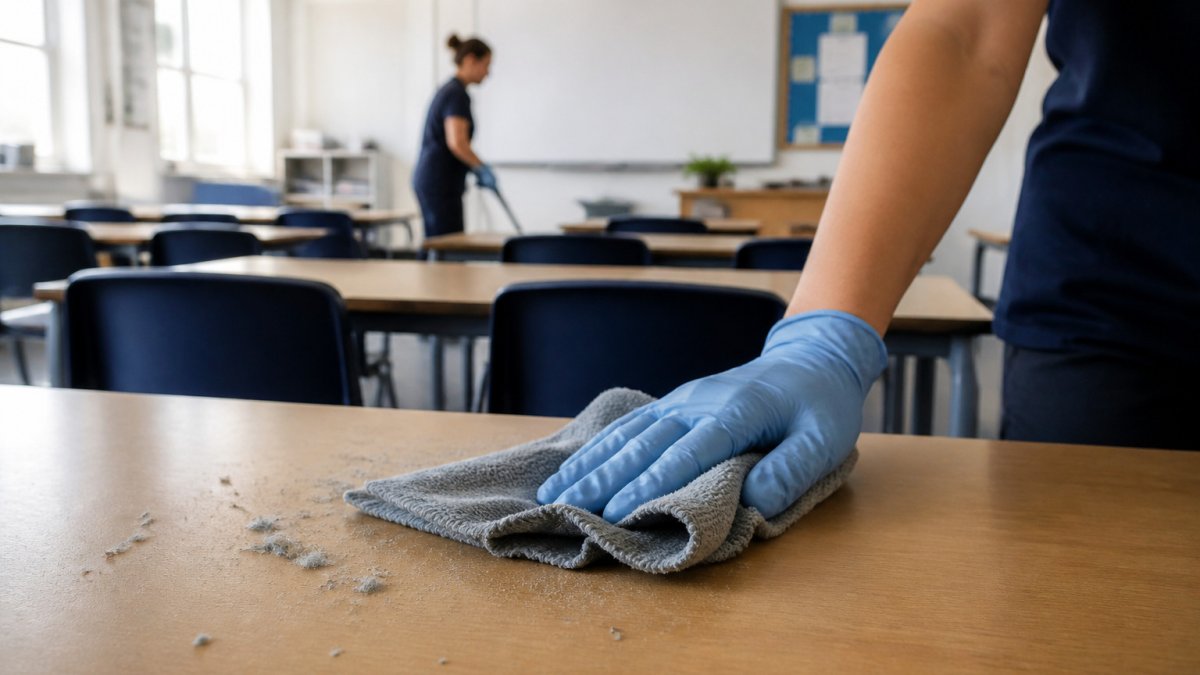
Damp dusting is wiping surfaces with a slightly damp microfibre cloth so dust clings to the fabric instead of rising into the air. A microfibre cloth holds dust well because the fine fibres trap particles.
Work top to bottom, so dust falls onto surfaces you have not cleaned yet. Rinse the cloth often in warm water. Use a fresh colour-coded cloth per zone to stop cross-contamination between toilets and classrooms.
Vacuuming and HEPA-Filter Vacuums
A HEPA-filter vacuum is a vacuum fitted with a high-efficiency particulate air filter that traps fine particles rather than blowing them back out. Best practices for school cleaning equipment procurement can help you choose the right machines and microfibre kit. Standard vacuums can recirculate the smallest dust, which defeats the purpose.
- Vacuum carpets and rugs at least twice a week
- Check and replace filters on a set schedule
- Use attachments on radiators, vents and under desks
- Empty or bag-change away from classrooms
Wet Mopping Hard Floors
Wet mopping lifts dust and spills from hard floors without raising a cloud. Sweeping dry pushes dust back into the air.
- Mop high-traffic areas daily
- Use a clean mop head per zone
- Change water often
- Dry floors to prevent slips
Dust Mite Control in Schools: Carpets, Soft Furnishings and Clutter
Dust mites are microscopic arachnids that feed on shed skin scales and thrive in warm, humid environments. Their waste products are a major allergen and can trigger asthma and allergic rhinitis in susceptible pupils. In schools, the key reservoirs are carpets, rugs, soft furnishings, cushions, soft toys and any fabric that holds moisture and organic matter. Clutter gives dust somewhere to settle and makes cleaning harder, so decluttering is part of mite control.
A practical, evidence-informed approach for Chester schools:
- Reduce soft furnishings where possible. In classrooms, consider replacing fabric-covered cushions with wipe-clean alternatives. In early years settings, use washable covers on sleep mats and wash them weekly on a hot cycle (at least 60°C) to kill mites.
- Vacuum carpets and rugs thoroughly. Use a HEPA-filter vacuum and go over high-traffic areas slowly, several passes. Vacuum at least twice weekly, and daily in rooms used by pupils with known mite sensitivity.
- Deep clean carpets periodically. Steam cleaning or hot-water extraction reduces mite populations and removes allergen reservoirs. Schedule this during holidays and ensure carpets dry fully within 24 hours to prevent mould.
- Wash soft toys and fabrics. If soft toys are used, wash them regularly on a hot cycle or freeze them for 24 hours to kill mites. Air-dry thoroughly.
- Clear clutter weekly. Store resources in closed boxes rather than open trays. Wipe shelves and windowsills with a damp cloth weekly to remove settled dust.
- Control humidity. Dust mites struggle when relative humidity is below 50%. Ventilate rooms daily and fix leaks promptly. In older Chester buildings near the river, use hygrometers to monitor humidity and consider dehumidifiers in damp areas.
Watch out: over-wetting carpets during cleaning can raise humidity and encourage mite and mould growth. Ensure good ventilation and allow carpets to dry completely before pupils return.
School Cleaning Best Practices for Allergen Control
Effective allergen control in schools goes beyond a generic clean. For the fuller picture, see school hygiene and infection control best practices. It requires a planned schedule with clear responsibilities, safe product choices and measures to protect pupils during cleaning. Below is a practical framework that busy Chester schools can adapt.
A Practical Classroom Cleaning Schedule
Use this as a starting point. Adjust frequencies to your building, pupil numbers and local conditions (e.g., proximity to the river or busy roads).
| Task | Frequency | Responsible |
|---|---|---|
| Damp dust desks, sills, shelves and radiators | Daily | Cleaning team |
| Vacuum carpets and rugs with HEPA machine | Twice weekly (daily in high-risk rooms) | Cleaning team |
| Wet mop hard floors in high-traffic areas | Daily | Cleaning team |
| Clear clutter and wipe open storage | Weekly | Class staff |
| Wash soft toys and fabrics on hot cycle | Weekly | Class staff / cleaning team |
| Check humidity and ventilation | Daily | Caretaker / class staff |
| Clean/vacuum vents and radiators | Termly | Caretaker |
| Deep clean carpets (steam or extraction) | Termly (holidays) | Contract cleaner |
| Replace HEPA filters | As per manufacturer (typically termly) | Caretaker |
| Review damp and condensation reports | Termly | Site manager |
Safe Cleaning Products and Exposure Reduction
Some cleaning products can irritate airways or trigger asthma. Choose fragrance-free products where possible. Never mix chemicals (e.g., bleach and ammonia) as this can produce toxic fumes. Clean when rooms are empty, schedule deep cleaning for after hours or holidays. Ventilate thoroughly after cleaning. Store all products locked away and out of pupils’ reach.
Cleaning during lesson time can expose pupils with asthma to sprays and fumes. Always follow product instructions and use the minimum quantity necessary.
Ventilation, Humidity and Moisture Control
Damp drives mould and dust mites, so ventilation matters as much as cleaning. For a deeper guide, see improving school indoor air quality. Open windows briefly each day to purge stale air, especially in older buildings with poor mechanical ventilation. Keep relative humidity between 40% and 60% where possible; use hygrometers to monitor. Fix leaks promptly and watch for condensation on windows, which signals poor airflow. In Chester’s riverside schools, consider dehumidifiers in damp areas during winter months.
Your Classroom Cleaning Checklist
Use this checklist as a starting point. Adjust frequency to your building and pupil numbers.
- Damp dust desks, sills and shelves daily
- Vacuum carpets twice weekly with a HEPA machine
- Wet mop hard floors daily in high-traffic areas
- Wipe radiators and vents weekly
- Clear clutter and wipe open storage weekly
- Wash soft toys and fabrics on a hot cycle
- Check humidity and ventilation daily
- Log filter changes and repairs
| Task | Frequency | Who |
|---|---|---|
| Damp dusting | Daily | Cleaning team |
| HEPA vacuuming | Twice weekly | Cleaning team |
| Wet mopping | Daily | Cleaning team |
| Clutter clear-out | Weekly | Class staff |
| Filter checks | Monthly | Caretaker |
Measuring Whether Your Interventions Work
You cannot manage what you do not check. Our step-by-step guide to auditing school cleaning standards shows how to check your cleaning is effective. Simple checks tell you whether your routine is working.
- Walk the rooms and look for dust on high ledges
- Check filter change logs are up to date
- Ask staff and pupils about symptoms
- Review damp and condensation reports
Planning Your Next Steps for a Cleaner School
The hardest part is keeping the routine going when staff are off sick or recruitment stalls. That is where a managed service helps. Nirvana Managed Services LTD supports schools with cleaning and caretaking cover, contract management and a fully managed service. We also provide commercial cleaning for offices.
Then get in touch to arrange a site review and build a cleaning plan that fits your building and budget. You can also read our how-to guide to improving school facility cleaning standards.
Frequently Asked Questions
How can schools reduce dust and allergens in classrooms?
Start with daily damp dusting using microfibre cloths, vacuuming with a HEPA-filter vacuum and wet mopping hard floors. Reduce clutter and soft furnishings that collect classroom dust, keep humidity in check and ensure good ventilation. A written classroom cleaning checklist helps staff keep these habits consistent, and reviewing them termly shows what is working.
How often should classrooms be dusted and vacuumed?
High-use surfaces such as desks, sills and radiators benefit from damp dusting daily or at least three times a week. Vacuuming carpets and rugs should happen at least twice weekly, more often in younger year groups. Hard floors need wet mopping daily in busy areas. Build these frequencies into your classroom cleaning checklist so cover staff can follow them when regular cleaners are absent.
How can schools reduce dust mite allergens in classrooms?
Dust mite control in schools focuses on soft furnishings and moisture. Wash washable fabrics such as cushion covers and soft toys at 60°C or above, vacuum carpets and rugs regularly with a HEPA-filter vacuum, and keep indoor humidity low through ventilation. Where possible, choose wipe-clean seating over fabric-covered options and reduce the number of soft items stored in classrooms.
What should a school cleaning checklist include for allergen control?
Include damp dusting of desks, sills, shelves and radiators; vacuuming of carpets and rugs with a HEPA-filter vacuum; wet mopping of hard floors; cleaning of soft furnishings and washable fabrics; and checks on ventilation and filter replacement. Add a section for clutter control and a note on safe use of cleaning products. Review the checklist termly and update it when staff or routines change.
Dust and allergens will always return, but a steady routine keeps them in check. If recruitment gaps are stopping your team from keeping up, Nirvana Managed Services LTD can help with managed cleaning, caretaking cover and contract management for schools and offices across Chester and Wrexham. Get started with Nirvana Managed Services LTD and give your pupils a cleaner, healthier place to learn.