Last Updated: November 21, 2026
Quick Summary
Eco-friendly school cleaning means choosing products, routines and waste methods that protect health and reduce environmental harm while still meeting hygiene standards. Schools can start by auditing their cleaning products, checking safety data sheets, using concentrates with dilution charts, and matching disinfectants only to high-risk areas.
- Check every product against its safety data sheet before approving it for use.
- Use concentrates with dilution charts and dosing equipment to avoid over-use.
- Reserve disinfectants for washrooms, food areas and high-touch points during illness.
- Separate routine cleaning from disinfection to cut unnecessary chemical exposure.
- Review the product list each term and remove duplicates or items with no clear use.
Table of Contents
- Why Chester Schools Are Rethinking Their Cleaning Products
- Choosing Eco-Friendly School Cleaning Products
- Reducing Cleaning Chemical Use in Schools Without Losing Hygiene
- A Room-by-Room Green Cleaning Checklist for Schools
- High-Touch Areas, Disinfection and Hand Hygiene
- Training Cleaning Staff in Sustainable Practices
- Booking a Managed Eco-Cleaning Plan for Your School
- Frequently Asked Questions
Why Chester Schools Are Rethinking Their Cleaning Products
Schools are reviewing how they clean, and many start with the products. Pupils and staff spend most of the day in close contact with the same desks, doors, taps and handrails, so the chemicals used on those surfaces matter.
Eco-friendly school cleaning is the practice of choosing products, routines and waste methods that protect health and reduce environmental harm while still meeting hygiene standards. It is not a single product or a switch to vinegar. It is a set of choices made across the whole building.
At Nirvana Managed Services LTD, we help schools with cleaning and caretaking staff recruitment and cover when members of staff are off sick. This guide sets out a practical approach for schools that want greener cleaning without losing control of quality.
Many schools start by auditing what is already in the cupboards. Bursars often find overlapping products with unclear labels and no record of use. A simple inventory listing product name, purpose and hazard information from the safety data sheet gives a clear baseline.
Choosing Eco-Friendly School Cleaning Products
Many schools have no dedicated procurement specialist, so product selection often falls to a business manager or caretaker comparing labels in a stock cupboard.
Start with the safety data sheet. Every product supplied for use at work should have one, covering hazard classification, required personal protective equipment, first-aid measures and storage conditions.
Next, check the label for recognised environmental information. In the UK, look for products carrying an accredited environmental label, as these indicate that the product has been assessed against recognised criteria.
Dilution is where many schools lose control. Concentrates are cheaper per litre and cut packaging, but only if staff dose them accurately.
Match the product to the surface. A fragrance-free all-purpose detergent suits desks, tables and general hard surfaces. Reserve disinfectants for washrooms, food preparation areas and high-touch points during illness outbreaks, and only where the label carries a relevant kill claim.
| Product type | Typical use in schools | What to verify |
|---|---|---|
| All-purpose detergent | Desks, tables, general surfaces | Safety data sheet, dilution guide, fragrance-free option |
| Disinfectant | Washrooms, food areas, high-touch points | Kill claim matched to need, contact time, COSHH assessment |
| Floor cleaner | Corridors, classrooms, halls | Low residue, slip-resistant finish, suitable for the floor type |
| Hand soap and sanitiser | Entrances, washrooms, dining areas | Dermatological testing, refill format, dispenser compatibility |
| Glass and board cleaner | Whiteboards, windows, mirrors | Solvent content, ventilation requirements |
A few selection rules keep purchasing consistent across a multi-site trust or a single school:
- Buy concentrates and refill systems where possible, to cut packaging and transport.
- Use dilution charts and dosing equipment so staff do not over-use products.
- Prefer fragrance-free products for classrooms and early years settings.
- Store products securely and keep a current record of what is on site.
- Ask suppliers for environmental accreditation evidence and a current safety data sheet before approving a product.
- Review the product list each term and remove duplicates or items with no clear use.
Watch out: a product labelled ‘eco-friendly’ can still be unsuitable for a school if it has no disinfection claim where one is needed, or if it requires ventilation that a busy classroom cannot provide.
Reducing Cleaning Chemical Use in Schools Without Losing Hygiene
Reducing chemical use does not mean reducing hygiene. The aim is to clean the right places, at the right frequency, with the right strength of product. Much of the chemical load in schools comes from over-cleaning low-risk surfaces and using disinfectant where soap and water would do.
Start by separating cleaning from disinfecting. Routine cleaning removes dirt and food residue with detergent and water. Disinfection is needed for specific high-risk areas, such as washrooms, food preparation spaces and surfaces touched frequently during illness outbreaks. Using disinfectant everywhere increases exposure without adding protection.
Microfibre cloths and colour-coded equipment also cut product use. A dry microfibre cloth picks up dust effectively, and colour coding stops cross-contamination between washrooms and classrooms. These changes reduce both chemical use and the number of cleaning cycles needed.
A Room-by-Room Green Cleaning Checklist for Schools
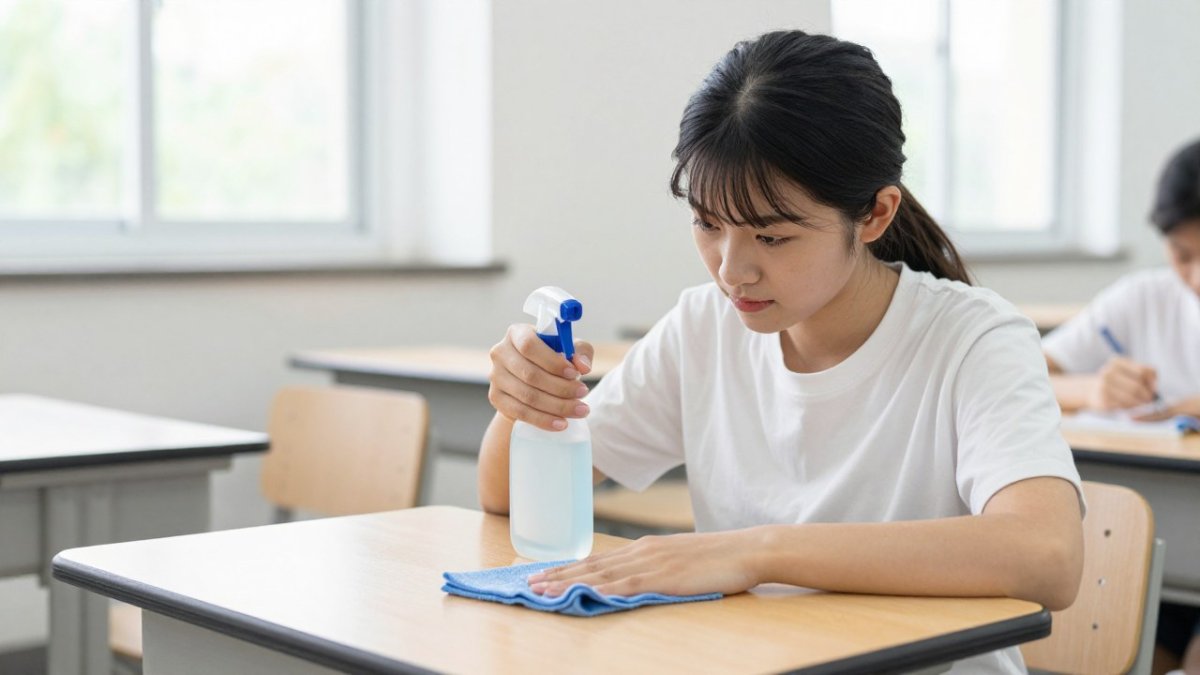
A checklist is only useful if it reflects the building it is written for. The version below is a starting point for a Chester school and should be adjusted to your site, timetable and waste arrangements. Each item can be checked, and each room type has a clear owner.
Classrooms
- Wipe desks and tables with a diluted all-purpose detergent and a colour-coded microfibre cloth
- Clean whiteboards with a suitable board cleaner, not a harsh solvent
- Empty and recycle bins, sorting paper, plastic and food waste according to the school’s waste contract
- Vacuum or dry mop floors, then damp mop as needed
- Check that hand sanitiser dispensers are stocked and working
Corridors and entrances
- Clean door handles, push plates and handrails daily
- Remove debris from entrance mats and check floor safety
- Refill hand sanitiser stations and check dispensers work
- Check that recycling bins at entrances are clearly labelled and not contaminated with general waste
Kitchens and dining areas
- Clean food contact surfaces with food-safe products, rinsed thoroughly
- Wipe tables after each sitting and sanitise where needed
- Check waste separation and remove food waste promptly
- Rinse and recycle cleaning-product containers according to the manufacturer’s instructions and the school’s waste arrangements
Washrooms
- Clean and disinfect toilets, sinks and taps with the correct product and dilution
- Restock soap, paper towels and bins
- Ventilate the room during and after cleaning
- Check that sanitary waste is disposed of through the contracted route, not general waste
Offices and staff rooms
- Wipe desks, keyboards and phones with an appropriate cleaner
- Empty bins and check recycling streams are being used correctly
- Check that cleaning-product packaging is separated for recycling where the local waste service accepts it
Sports halls and shared spaces
- Clean equipment handles and shared surfaces after use
- Check floor cleaners are suitable for the sports floor and do not leave a slippery residue
- Empty bins and check that drinks containers are recycled
Measuring whether the routine is working
A checklist tells you what should happen; it does not tell you whether it did. A few simple indicators help a Chester school see whether its green cleaning routine is delivering:
- Product use per pupil, calculated from concentrate dilution ratios and monthly usage records
- Packaging waste generated per term, and how much of it is recycled through the school’s waste contract
- Cleaning completion rates from signed checklists or a digital cleaning management system
- Hygiene audit results from washroom and kitchen inspections
- Water use in washrooms, checked against meter readings where available
These measures do not need to be complicated. A termly review of product invoices, waste collections and audit scores is enough to spot drift and correct it.
Local waste and recycling arrangements
Waste is usually managed through a school waste contract rather than household collections. Cleaning routines should connect to that contract: cleaning-product packaging, cardboard, plastic containers and food waste should be separated at the point of use. Contamination is the most common reason recycling is rejected, so label bins clearly and check them during the cleaning round.
Watch out: a checklist that is too long will be signed without being followed. Keep the room-by-room list to one side of A4 per room type, review it each term and remove items that no longer reflect how the building is used.
High-Touch Areas, Disinfection and Hand Hygiene
High-touch areas need the most attention because germs spread through shared surfaces. Door handles, light switches, taps, handrails, photocopier buttons, keyboards and shared equipment should be cleaned at least once a day, and more often during illness.
Disinfection should follow cleaning. Remove visible dirt first, because disinfectants work poorly on soiled surfaces. Then apply the product, leave it for the contact time on the label, and allow the surface to air dry where the label requires it.
Hand hygiene is one of the most effective infection controls in schools. Keep sanitising stations at entrances, classrooms and dining areas stocked, and check that soap dispensers and paper towel supplies are sufficient. Many schools find that simple, well-supplied washroom facilities do more for hygiene than any additional chemical product.
Training Cleaning Staff in Sustainable Practices
Consistent results depend on trained staff. Cleaners who understand why a product is used, and how to use it safely, are more likely to follow the correct method every time. Training should cover product labels and safety data sheets, dilution and dosing, colour-coded equipment, safe storage, and waste sorting.
A practical training session can be short. A walk through a single classroom, showing the correct dilution, cloth colour and cleaning order, often teaches more than a long presentation. Repeat the training when new products are introduced and check it has been understood.
Store products in a locked, labelled area away from food and pupil access. Keep a record of what has been issued to each cleaner and what has been used. Check the current guidance with your health and safety lead.
Booking a Managed Eco-Cleaning Plan for Your School
Some schools prefer to hand day-to-day work to a managed provider rather than run cleaning in-house. A managed service can cover cleaning routines, product selection, staff recruitment, contract management and cover when a member of staff is absent through illness, reducing the risk of gaps in cleaning.
Nirvana Managed Services LTD provides managed soft services for schools and commercial offices, including cleaning and caretaking staff, recruitment, contract management and cover. If you would like to review your current arrangements or talk through an eco-cleaning plan for your site, you can contact our team for a conversation about your school’s needs.
Pricing depends on the size of your site, the number of cleaning hours, the frequency of visits and the products you choose. For a current quote, contact Nirvana Managed Services LTD directly.
Before choosing a provider, ask how they select products, how they train staff and how they report on the work they do. Clear answers on those points tell you far more than a brochure.
Frequently Asked Questions
What makes a school cleaning routine eco-friendly?
An eco-friendly school cleaning routine uses products with lower toxicity, dilutes concentrates correctly to avoid waste, relies on microfibre cloths and proper technique rather than excess chemicals, and schedules cleaning so that high-use areas are maintained daily. It also includes recycling and waste sorting, and staff are trained to use the right product for each surface. The aim is to keep classrooms hygienic while reducing chemical exposure for pupils and staff.
Which cleaning products are suitable for schools?
Suitable products are those with clear ingredient labels, sensible hazard classifications and a documented use for the surface being cleaned. Schools should check that products are suitable for use around children, that safety data sheets are available, and that staff know how to store and dilute them. Ask suppliers for evidence of independent certification before committing to a range, and trial products in one area before switching the whole site.
How can schools reduce cleaning chemical use?
Schools can reduce chemical use by matching product strength to the task, using dilution systems that prevent over-mixing, and cleaning with water and microfibre for routine dusting and wiping. Disinfectants should be reserved for high-touch surfaces and areas where infection control genuinely requires them. Regular staff training on correct dilution and a simple log of product use make it easier to spot and reduce waste.
Can a managed cleaning provider help with sustainable cleaning in a school?
A managed cleaning provider can help with cleaning routines, staff recruitment and cover when members of staff are off sick. Pricing depends on the size of the site, the frequency of cleaning and the scope of the service, so Nirvana Managed Services LTD recommends contacting the team directly for a quote tailored to your school. Ask any provider how they verify product claims and how they handle cover when a member of staff is absent.


