Table of Contents
- Why Indoor Air Quality Matters in Schools
- Assess Your Current Air Quality and Ventilation
- School Ventilation Best Practices
- School Cleaning and Indoor Air Quality
- School Air Quality Monitoring Systems
- Indoor Air Quality Checklist for Schools
- Common Mistakes to Avoid
- Conclusion
- Frequently Asked Questions
Last Updated: October 6, 2026
Why Indoor Air Quality Matters in Schools
Poor air quality in schools affects everyone. Children struggle to concentrate. Teachers feel exhausted by day’s end. Parents worry about their kids’ health. Improving school indoor air quality transforms learning environments across the region.
The problem is simple: most schools don’t monitor what’s happening in their air. Windows stay closed in winter. Ventilation systems run on outdated settings. Cleaning routines miss the sources of poor air quality. The result is stuffy classrooms where germs spread quickly and learning suffers.
Good air quality isn’t a luxury. It’s the foundation for healthy, productive schools. When you get this right, attendance improves. Behaviour problems drop. Test results climb. Staff retention gets easier too.
Assess Your Current Air Quality and Ventilation
Start by understanding what you’re working with. Walk through your school building and check these basics:
- Look at your windows. Can they open freely? Are they sealed shut for heating season?
- Find your air vents. Are they blocked by furniture or covered with dust?
- Check your HVAC system. When was it last serviced? Do filters look clean?
- Smell the air. Does it feel fresh or stale? Are there lingering odours?
- Ask staff. Do teachers complain of headaches or fatigue? Do children seem restless?
These observations tell you where problems exist. Next, consider a professional assessment. A facilities manager or environmental health specialist can measure CO₂ levels, humidity, and temperature. Many schools find that a simple audit costs far less than fixing problems after they’ve affected learning.
Document what you find. Take photos of blocked vents. Note which rooms feel stuffiest. This baseline becomes your roadmap for improvement.
Check your school’s building manual or maintenance records first. Previous assessments often contain valuable baseline data you can build on.
School Ventilation Best Practices
Proper ventilation is the backbone of improving school indoor air quality. It removes stale air and brings in fresh oxygen that students need to think clearly.
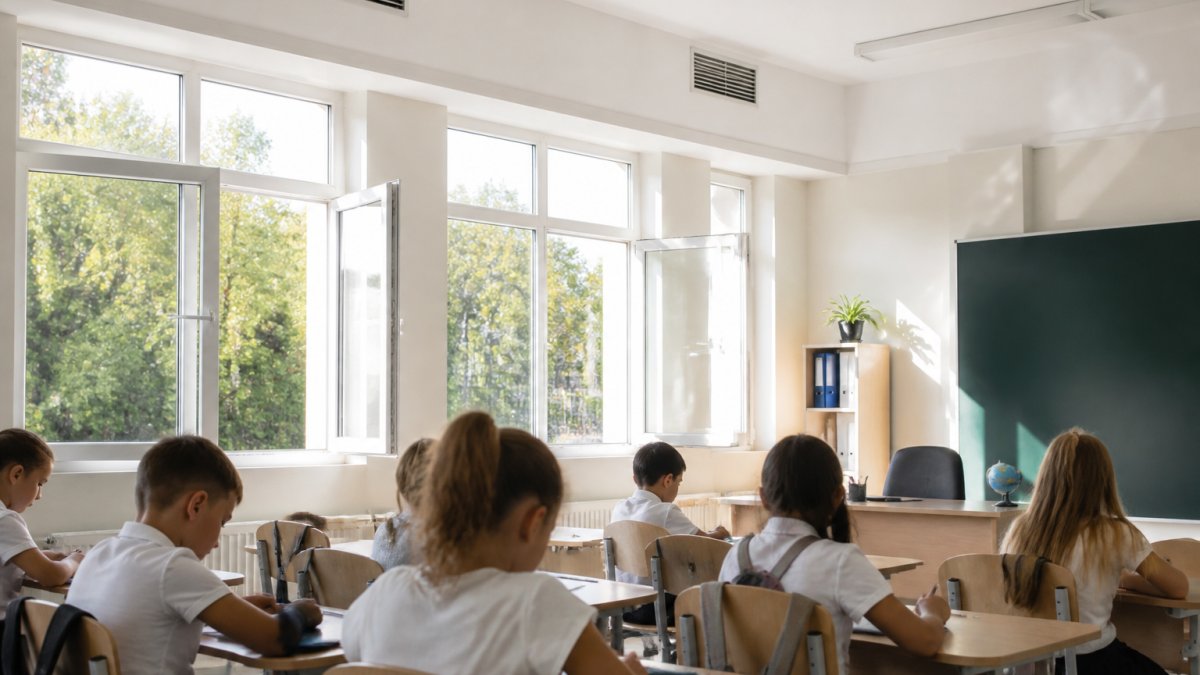
Natural ventilation works when you use it right. Open windows during mild weather. Create cross-ventilation by opening windows on opposite sides of rooms. Even 10 minutes of fresh air between lessons makes a difference. Many schools find that opening windows during breaks keeps air fresh without disrupting lessons.
Mechanical ventilation needs attention. Your HVAC system should deliver fresh air at least once every two hours. Check that filters are changed on schedule. Clogged filters reduce airflow and waste energy. Many schools switch to higher-grade filters during autumn and winter when windows stay closed.
Humidity matters too. Air that’s too dry causes respiratory irritation. Air that’s too damp encourages mould. Aim for 30-50% relative humidity. Simple hygrometers cost little and tell you immediately if humidity is out of balance.
Ventilation during illness seasons. When colds and flu spread, increase fresh air intake. Schools often boost ventilation in autumn and winter. Some open windows even on cool days. This single step reduces transmission of airborne illness.
Ductwork and vents need cleaning. Dust and debris accumulate inside ducts over years. This reduces airflow and spreads particles through classrooms. Professional duct cleaning every 3-5 years keeps your system efficient.
School Cleaning and Indoor Air Quality
Here’s what most guides miss: cleaning is part of your air quality strategy, not separate from it.
Dust settles on every surface. It contains allergens, skin cells, and particles that stay in the air when disturbed. Poor cleaning practices actually make air quality worse by stirring up dust instead of removing it.
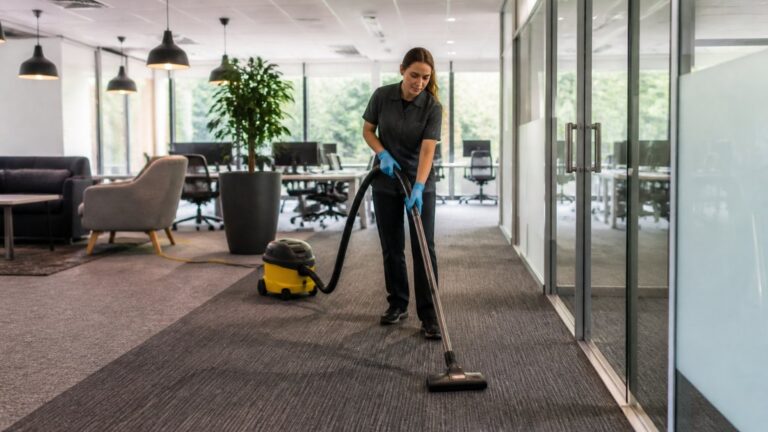
Use the right cleaning methods. Dry sweeping spreads dust. Wet mopping traps it. Vacuum cleaners with HEPA filters capture fine particles instead of recirculating them. When you clean classrooms, use damp cloths and mop floors. This removes dust rather than sending it airborne.
Clean high-dust areas weekly. Carpets, soft furnishings, and fabric surfaces trap particles. Classrooms with carpet need more frequent vacuuming than tiled areas. Curtains and upholstered chairs should be cleaned or replaced annually.
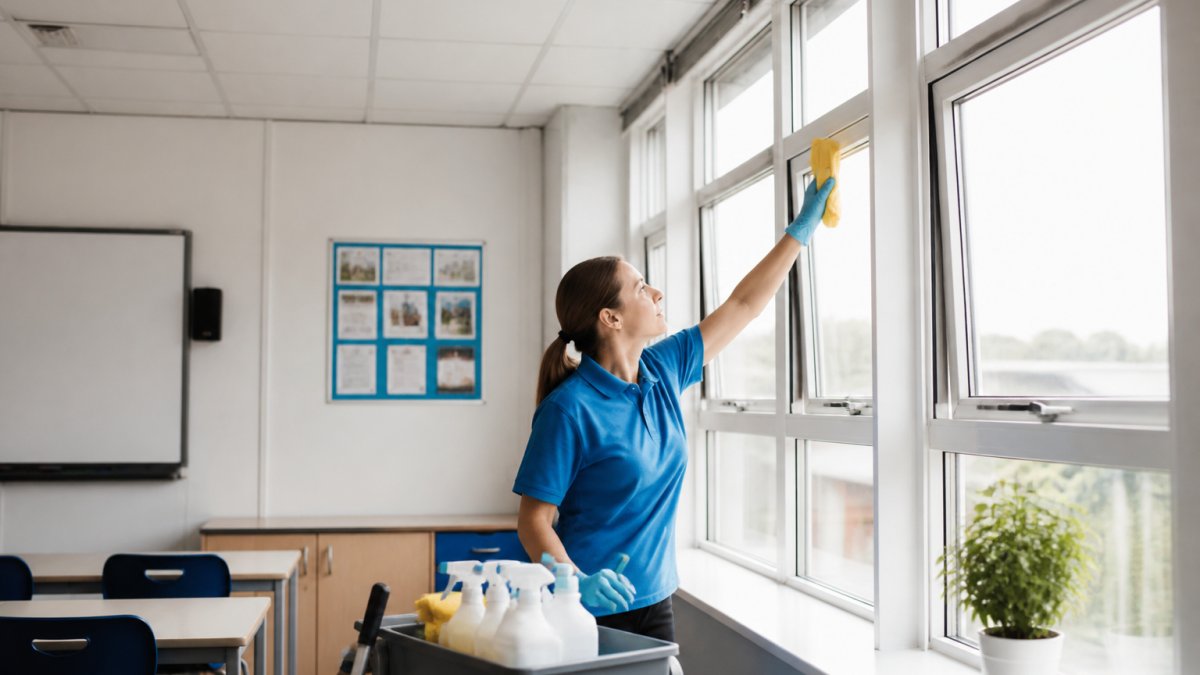
Pay attention to hidden spaces. Dust accumulates on top of ceiling tiles, inside light fixtures, and around air vents. These areas get overlooked but affect air quality directly. Include them in your cleaning schedule monthly.
Cleaning products matter. Some cleaners release volatile organic compounds (VOCs) that degrade air quality. Choose products marked low-VOC or fragrance-free. Better yet, use simple solutions like vinegar and water for many tasks.
Many schools benefit from outsourced cleaning services that understand air quality. Nirvana Managed Services LTD helps schools manage cleaning rotas and ensures consistent standards. When staff call in sick, we provide cover so cleaning doesn’t slip.
Never use aerosol sprays or heavily scented products in schools. These degrade air quality and can trigger asthma in sensitive children.
School Air Quality Monitoring Systems
You can’t improve what you don’t measure. Monitoring systems give you data to guide decisions.
CO₂ monitors are the simplest starting point. Carbon dioxide builds up in crowded classrooms. High CO₂ (above 1,000 ppm) signals that ventilation is inadequate. Affordable monitors tell you immediately when to open windows or boost mechanical ventilation.
Multi-parameter monitors measure more. These track CO₂, temperature, humidity, and sometimes particulate matter. They cost more but give a complete picture of air conditions. Schools often place one in a central location and move it between classrooms.
Placement matters. Put monitors at child height, away from windows and doors. Readings taken near fresh air sources or draughts won’t reflect what children actually breathe.
Log your data. Record readings weekly or daily. Track patterns. You’ll notice that CO₂ rises during lessons and drops after windows open. Temperature and humidity vary by season. This data guides your ventilation strategy.
Act on what you learn. If CO₂ consistently exceeds 1,000 ppm, increase ventilation. If humidity climbs above 60%, check for moisture problems. If readings improve after you open windows, you’ve found a simple fix.
Many schools combine monitoring with a simple action plan. When CO₂ hits a target level, staff know to open windows. This becomes routine and requires no extra effort.
Indoor Air Quality Checklist for Schools
Use this checklist to audit improving school indoor air quality across your building.
| Task | Frequency | Responsibility |
|---|---|---|
| Check windows open freely | Monthly | Caretaker |
| Inspect air vents for blockages | Monthly | Caretaker |
| Change HVAC filters | Every 3 months | Maintenance |
| Clean air ducts professionally | Every 3-5 years | Contractor |
| Measure CO₂ levels | Weekly | Facilities staff |
| Record temperature and humidity | Weekly | Facilities staff |
| Wet-mop classrooms | Daily | Cleaning staff |
| Vacuum with HEPA filters | 2-3 times weekly | Cleaning staff |
| Clean high-dust areas | Monthly | Cleaning staff |
| Inspect for mould or moisture | Monthly | Caretaker |
| Review air quality data | Monthly | Facilities manager |
| Test ventilation system | Annually | HVAC contractor |
Print this checklist and assign responsibilities. Nirvana Managed Services LTD helps schools manage these tasks. We handle recruitment of cleaning and caretaking staff, provide contract management, and offer cover when team members are absent. This ensures nothing slips through the cracks.
Common Mistakes to Avoid
Closing windows to save heating costs. Yes, heating bills rise when windows open. But poor air quality costs far more in lost learning time, staff illness, and absenteeism. Balance comfort and cost by opening windows strategically during mild weather and between lessons.
Ignoring HVAC maintenance. A system that seems fine now may be failing silently. Dirty filters reduce airflow. Unmaintained ducts spread dust. Schedule professional servicing annually. This prevents expensive breakdowns and keeps air quality consistent.
Using strong-scented cleaners. They mask odours but don’t remove them. Many release chemicals that irritate airways. Simple, fragrance-free products work better and cost less.
Forgetting about humidity. Too dry or too damp air affects concentration and health. A basic hygrometer shows you the problem. Dehumidifiers or humidifiers fix it cheaply.
Cleaning during school hours. Vacuuming and mopping stir up dust when children are present. Schedule cleaning before school starts or after it ends. This prevents dust from affecting air quality when students are learning.
Monitoring without acting. Installing a CO₂ monitor means nothing if you ignore high readings. Use data to guide decisions. Open windows when CO₂ rises. Adjust ventilation if humidity climbs. Let the data drive change.
Conclusion
Improving school indoor air quality is achievable. Start small: assess what you have, open windows more, and clean more carefully. Add monitoring so you know whether changes work. Build a routine around the checklist above.
For schools struggling with staffing, this is where outsourced support helps. Nirvana Managed Services LTD manages cleaning and caretaking recruitment. We provide contract management and cover when your team is absent. Good cleaning is part of good air quality, and we make sure it happens consistently.
Contact us for a conversation about how we can support your school’s facilities and help you maintain the standards that protect student health and learning.
Frequently Asked Questions
How often should schools check ventilation and air quality?
Schools should conduct air quality checks at least twice per term, or monthly if you have a monitoring system installed. Ventilation should be inspected seasonally before autumn and spring terms. If you notice stuffiness, odours, or condensation, check immediately. Regular checks help catch problems early before they affect student concentration and health.
Can cleaning help improve indoor air quality in schools?
Yes. Regular cleaning reduces dust, allergens, and microbial growth that degrade air quality. Vacuum carpets and soft furnishings weekly with HEPA filters, wipe hard surfaces to prevent dust accumulation, and ensure toilets and kitchens are cleaned daily to control odours and bacteria. School cleaning and indoor air quality are directly linked, neglecting one undermines the other.
What should a school do if a classroom feels stuffy?
Open windows immediately for 10-15 minutes to create cross-ventilation. Check that air vents are not blocked by furniture, displays, or debris. If stuffiness persists, ensure mechanical ventilation systems are running and filters are clean. Document the issue and investigate whether HVAC maintenance is needed. Persistent stuffiness often signals inadequate ventilation capacity.
Who is responsible for indoor air quality in a school?
The headteacher and governing body hold overall responsibility for health and safety, including air quality. The facilities manager or caretaking team manages daily ventilation and cleaning. The business manager oversees budget and contractor relationships. Everyone shares responsibility, teaching staff should report problems, and support staff must maintain systems. Clear accountability prevents gaps.
UK Health and Safety Executive guidance on workplace air quality
CIBSE guidance on ventilation in educational buildings
Department for Education standards on school facilities and environment