
Table of Contents
- Why Professional School Cleaning Matters
- Outsourced vs In-House School Cleaning: The Real Differences
- School Cleaning Contract Management: What You Need to Know
- Quality Standards and Compliance for School Cleaning
- Handling Staff Absence and Emergency Cover
- Commercial Office Cleaning Services Chester: Extending Beyond Schools
- Is Professional School Cleaning Right for Your Institution?
- Frequently Asked Questions
Last Updated: September 29, 2026
Why Professional School Cleaning Matters
A school’s cleanliness directly affects how parents, staff, and pupils perceive the institution. When a classroom is spotless, pupils focus better. When toilets are well-maintained, attendance improves. Yet many schools struggle to keep cleaning standards high whilst managing recruitment gaps, staff absences, and budget constraints.
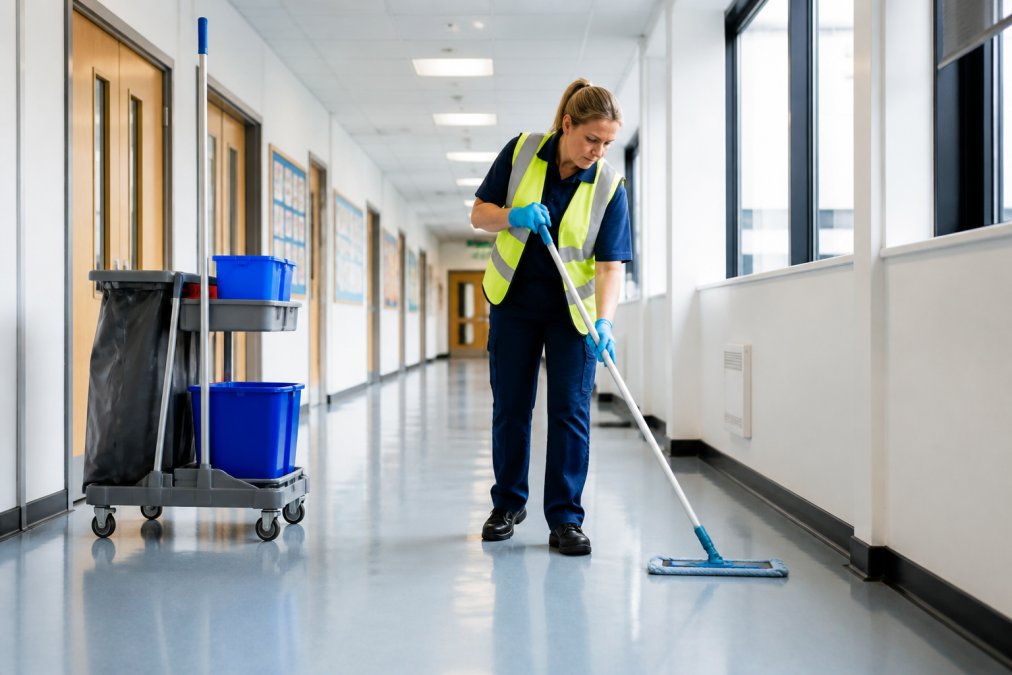
Professional school cleaning addresses this tension head-on. Rather than juggling recruitment, training, and cover arrangements yourself, outsourcing puts a dedicated team in place. At Nirvana Managed Services LTD, we’ve helped schools maintain consistent cleanliness without the administrative burden of managing cleaning staff directly.
The question isn’t whether your school needs cleaning, it’s whether managing it in-house or outsourcing delivers better value. That answer depends on your specific circumstances: staff availability, budget flexibility, compliance requirements, and how quickly you need cover when someone calls in sick.
Schools often underestimate the hidden costs of in-house cleaning: recruitment advertising, training time, National Insurance contributions, holiday pay, and emergency cover arrangements. Professional cleaning services bundle these into a single contract, making budgeting more predictable.
Outsourced vs In-House School Cleaning: The Real Differences
The choice between outsourced and in-house cleaning isn’t simply about cost. It’s about what you control, what you delegate, and where your school’s priorities actually lie.
In-house cleaning gives you direct control. Your staff know the building, understand your routines, and respond immediately to spills or urgent situations. You set the schedule, inspect the work daily, and make adjustments on the fly. The downside is real: recruitment takes weeks, training takes months, and one person’s absence creates chaos. A cleaner with flu suddenly leaves you with no one to open the toilets before the school day starts.
Outsourced professional school cleaning transfers that operational burden to a specialist provider. You gain predictability: a contract specifies standards, response times, and cover arrangements. When your regular cleaner is ill, the provider sends a replacement within hours. You’re no longer managing payroll, National Insurance, or recruitment. The trade-off is less day-to-day control and dependency on the provider’s reliability.
Most schools find the outsourced model wins when recruitment is difficult, staff turnover is high, or emergency cover is critical. In-house works best for very small schools with stable, long-serving staff who are genuinely invested in the role.
Outsourcing professional school cleaning eliminates recruitment risk and guarantees cover during absences. In-house cleaning offers more direct control but requires you to handle all staffing complexity yourself.
School Cleaning Contract Management: What You Need to Know
A contract is only as good as how it’s managed. Many schools sign professional school cleaning agreements, then discover the provider cuts corners or misses agreed standards because no one is actively monitoring performance.
Effective contract management starts with clarity. Your agreement should specify exactly what gets cleaned daily, weekly, and termly. Define which areas are priority (toilets and high-touch surfaces first), which can wait, and what happens if something urgent arises. Include response times for emergency situations, how quickly can a cleaner reach your site if a toilet overflows or a spill poses a safety risk?
Schedule regular inspections. Walk the school with the cleaning provider monthly. Photograph any areas that aren’t meeting standard. Document what was agreed versus what’s actually happening. Most providers respond immediately when they know you’re paying attention.
Include a performance clause. If standards slip consistently, your contract should allow you to raise concerns formally and give the provider a chance to improve. If they don’t, you need an exit route. A 30-day termination clause protects both sides.
For schools, contract management is especially important because weather and seasonal changes affect cleaning needs. Winter brings mud and wet floors; autumn brings leaf debris. Your contract should reflect these variations.
The biggest mistake is signing a contract then assuming it will work. Providers cut corners when no one is checking. Monthly inspections and documented feedback prevent this and keep standards consistent.
Quality Standards and Compliance for School Cleaning
Schools must meet specific cleanliness and hygiene standards. These aren’t optional, they’re tied to safeguarding, health and safety, and regulatory compliance.
The Health and Safety at Work etc. Act 1974 requires schools to maintain safe premises, including clean toilets, floors free from slip hazards, and proper waste disposal. Environmental Health Officers can inspect schools and issue enforcement notices if standards fall short. This isn’t theoretical, schools have faced fines and reputational damage from poor hygiene.
Professional school cleaning providers understand these obligations. They use approved cleaning chemicals, follow colour-coded mop systems to prevent cross-contamination, and maintain detailed cleaning logs. Many hold relevant certifications or follow industry standards.
When evaluating professional school cleaning services, ask about their compliance framework. Do they understand the specific requirements for school environments, including safeguarding around access to cleaning cupboards and chemical storage? Can they provide evidence of staff training? Do they have public liability insurance?
Quality standards also include responsiveness. A professional provider doesn’t just clean, they spot maintenance issues early. A loose tile, a faulty door lock, or mould developing in a corner gets reported so you can fix it before it becomes a safety problem.
Handling Staff Absence and Emergency Cover
This is where professional school cleaning genuinely changes operations. When your in-house cleaner calls in sick, you have minutes to find a replacement. When a provider has someone absent, they send a trained substitute within hours.
Emergency cover matters most during term time. A school can’t open with filthy toilets. Parents won’t drop their children at a building that looks uncared for. Yet recruitment means you’re often one illness away from that exact scenario.
Professional providers manage absence through pooled staffing. They employ multiple cleaners across several schools, so absence at one site is covered by redeploying staff from another or calling in a trained reserve. This works because they’ve built redundancy into their model.
For schools, this reliability is particularly valuable during winter months when illness rates spike. You don’t want to be ringing around trying to find emergency cover whilst managing pupil drop-off.
Discuss cover arrangements before signing a contract. How quickly can they respond to absence? Is there a surcharge for emergency cover? What happens if they can’t find a replacement, do you get a service credit? Clear answers now prevent frustration later.
Schools with high staff turnover, seasonal illness spikes, or limited administrative capacity benefit most from professional cover arrangements. Larger schools with multiple cleaning staff can sometimes manage absence in-house, but the risk remains.
Commercial Office Cleaning Services Chester: Extending Beyond Schools
Professional cleaning doesn’t stop at schools. Many facilities managers and office building owners face identical challenges: maintaining standards, managing staff, handling absence.
Commercial office cleaning services in Chester operate on the same principles as school cleaning. A provider takes responsibility for daily cleaning, sets quality standards, and guarantees cover when staff are absent. The main difference is the environment: offices have different cleaning priorities than schools (fewer toilets, more desk and floor space, different high-touch areas).
If your organisation runs both a school and office buildings, consolidating with one professional provider can simplify management. You have one contract, one point of contact, consistent standards across sites, and a single cover arrangement for all locations.
The outsourced model works equally well for offices. You eliminate recruitment overhead, gain predictable costs, and ensure your workspace always looks professional. First impressions matter, clients notice a clean reception area and well-maintained facilities.
Is Professional School Cleaning Right for Your Institution?
Professional school cleaning makes sense if any of these apply to your school:
You’ve struggled to recruit or retain cleaning staff. Turnover is high, candidates are unsuitable, or you’re constantly advertising. A provider handles this entirely, it’s their problem, not yours.
Staff absence creates operational chaos. When someone calls in sick, you scramble to find cover. A professional provider guarantees a replacement within hours.
Your budget is tight and unpredictable. In-house cleaning involves fixed salary, National Insurance, holiday pay, and training costs that fluctuate. Professional services offer fixed monthly fees you can budget for confidently.
You’re managing multiple sites. Coordinating cleaning across several buildings is complex. A provider handles all sites under one contract.
You need reliable emergency cover during peak illness seasons. Winter brings flu and stomach bugs. You need someone you can call who will actually send a cleaner, not just sympathise.
Your school is small and recruitment is nearly impossible. Tiny schools with one or two cleaning staff are vulnerable to absence. Professional cover solves this.
On the other hand, in-house cleaning might be right if your school has stable, long-serving cleaning staff who are genuinely committed to the role, you have the administrative capacity to manage payroll and recruitment, and emergency absence is rare because your team is reliable.
The real answer depends on your specific situation. But for most schools, professional school cleaning eliminates a significant operational headache whilst improving reliability and compliance.
Professional school cleaning isn’t a luxury, it’s a practical solution to a genuine problem.
Frequently Asked Questions
What are the main benefits of professional school cleaning services?
Professional school cleaning delivers consistent hygiene standards, reduces illness transmission, improves pupil attendance, and frees internal staff to focus on education rather than maintenance. Professional teams bring specialist equipment, trained personnel, and accountability through service contracts that in-house cleaning often lacks. They also provide emergency cover when your own staff are absent, preventing disruption to the school day.
How does outsourced vs in-house school cleaning affect your budget?
Outsourcing eliminates recruitment costs, training overhead, holiday and sick pay liability, and equipment investment. In-house cleaning requires permanent staffing, benefits, and management time. The financial comparison depends on your school size, current staffing costs, and local wage rates. Professional providers offer flexibility to scale services up or down with your needs. Contact providers directly for quotes tailored to your institution’s specific requirements.
What happens if a cleaner calls in sick with a professional cleaning service?
Managed professional cleaning services maintain backup staff or dedicated cover arrangements to ensure continuity. Unlike in-house cleaning where absence creates immediate gaps, professional providers contractually guarantee cover within hours. This means your school maintains standards during staff illness without scrambling to find replacement cleaners. This reliability is particularly valuable for primary schools where parents expect consistent presentation.
Are professional school cleaning services suitable for small primary schools?
Yes. Professional cleaning providers work with schools of all sizes, from small primary schools with 15 staff to large secondary institutions. Smaller schools often benefit most from outsourcing because they lack dedicated HR infrastructure to manage recruitment and absence cover. Professional services scale their support to match your school’s needs and budget.